Published on: 15/07/2024 Updated on: 20/02/2025
Mario Passanante, Mafra ambassador, kicks off the Dolomiti Gold Cup in his Fiat 508 C to defend his lead in the Italian Major Events Championship
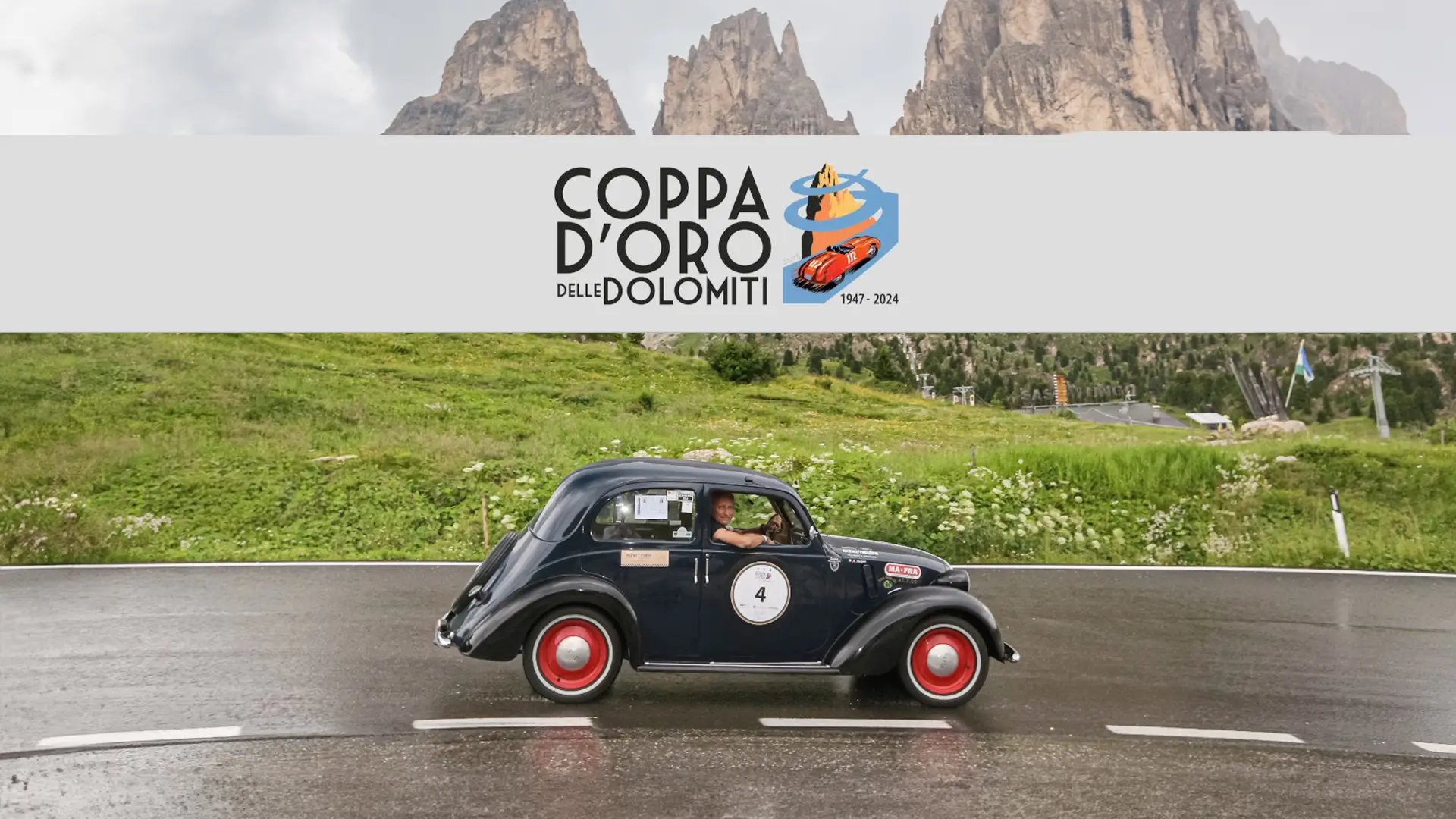
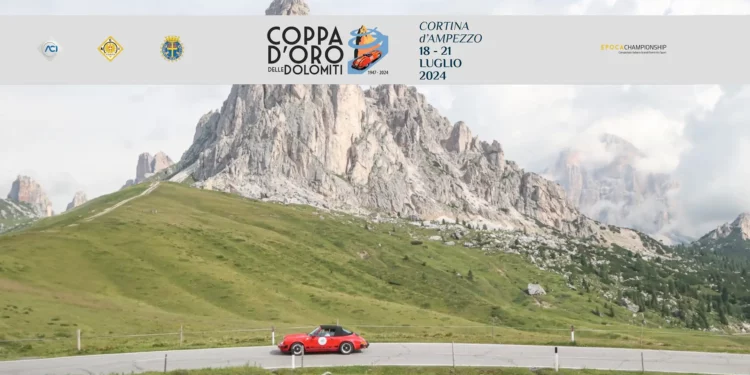
Mario Passanante, ambassador Mafra and former winner of the Italian Major Events Championship last year, goes down in the race at the Gold Cup of the Dolomites 2024, which takes place July 18-21.
His goal, aboard the Fiat 508 C he shares with navigator Alessandro Molgora, is to defend the lead in the 2024 Championship.
La overall ranking indeed sees him in the lead with 94.5 points against the 75.5 of the first pursuer, Giovanni Moceri driving a Lancia Ardea. In the first two races of the season, Passanante has in fact won the Milan-San Remo and finished second at the Mugello circuit..
The Sicilian champion is also first in the rankings of the RC2 category (cars built from 1931 to 1950) and the RC2 1600 class . Finally, FM Franciacorta Motori, whose colors Mario defends, is narrowly in command of the Italian Scuderie Championship.
This is in what spirit our ambassador faces the challenging Dolomite test.
A fascinating race
Mario Passanante has already won four editions of the Coppa d'Oro delle Dolomiti, in two of them already in the role of Mafra ambassador. In 2021 his navigator was Dario Moretti, last year Alessandro Molgora, president of the FM Franciacorta Motori stable. In both cases the car was Mario's 1937 Fiat 508 C.
"For someone like me from Campobello di Mazara del Vallo," Passanante says, "the Gold Cup means enjoying the beauty of the Dolomites and the cool climate."
This does not mean, however, going on vacation. "The course is challenging, and for two years already, hostilities begin on Thursday with a 40-kilometer prologue with 18 tube passes and an average test."
Then there are the two long stages on Friday and Saturday that make the Coppa d'Oro for Mario "one of the absolute best races, along with the Targa Forio in my Sicily."
Tackling an unbroken sequence of Dolomite passes with a 1937 car, however, requires adequate preparation.
"I rebuilt the 1100 engine of my 508 seven years ago," Passanantesays, "using new materials (pistons, bushings, etc.), but always respecting the originality: it has always run great, but now it is starting to show some signs of suffering." For example, he registers oil leaks from the level dipstick, a symptom of malfunctions.
While waiting to have his trusted mechanic put his hands on the car during the upcoming winter break, Mario relies on experience. "With pre-war cars," he explains, "you always have to be gentle, avoiding squeezing the engine unnecessarily and finding the right balance between performance and respect."
However, with passes over 2,000 meters, continuous ascents and descents, the problem is not only the powertrain.
"Even though I have the shoes reviewed before every race, you have to treat the brakes with caution, using the engine brake and always using second and third gears downhill. This is to have the system in perfect working order when passing over the timing tubes with the hundredth-of-a-second precision needed."
Mario explains that one should never be too fast, so much so that fourth gear is rarely used, so as not to be forced to brake too hard.
It is a matter of experience and skill, gifts that are certainly not lacking in our ambassador, winner of all the major races.
Finally, the preparation of the car: "Before every race," concludes the Sicilian driver, "I have all the nuts and bolts of the car tightened, to avoid ... losing parts."
In 2019, in fact, at the Nuvolari Grand Prix under the floorpan the drive shaft came loose from the 508's differential, precisely because of the loose bolts.
Mario still managed to surge over the last tube, get the mast temporarily reattached with a bolt, and win the race. Since then, however, he pays close attention to these kinds of checks before each participation.
[foogallery id=”13096″]
An important tradition
The first edition of the Coppa delle Dolomiti, at that time a speed race and not, as today, a regularity race, took place in 1947. It was won by Salvatore Ammendola in anAlfa Romeo 6C 2500 SS that completed the more than 300 kilometers of the course at an average speed of 76.5 km/h.
The competition was held continuously until 1956 and took the name Coppa d'Oro delle Dolomiti in 1951. It was won by great drivers such as Giovanni Bracco (Maserati), Gianni and Paolo Marzotto (also with Ferraris) and Giulio Cabianca (Osca).
The only foreigner to succeed was Belgian Olivier Gendebien, first in 1955 in a Mercedes 300 SL. Other important drivers who finished on the podium in the various editions were Gigi Villoresi, Piero Taruffi, Umbero Maglioli and Eugenio Castellotti.
Since 2013, the competition has resumed as a regularity race for historic cars and has seen the greatest champions of the specialty, such as Giuliano Canè, Giovanni Moceri and our ambassador Mario Passanante, establish themselves.
Three days on the Alpine passes
The event, which has Cortina d'Ampezzo (BL) at its heart, features three different categories of cars, with separate rankings. In the Coppa d'Oro delle Dolomiti, which is valid for the Italian Major Events Championship, cars produced up to 1971 can participate; in the Coppa d'Oro delle Dolomiti Legend those from 1970-1990; and in the Coppa d'Oro delle Dolomiti Tribute, road-going GTs built from 1991 onward.
The race kicks off on Thursday, July 18 with technical and sporting scrutineering, the starting ceremony, with the cars parading from 6 p.m. in the central Corso Italia in Cortina d'Ampezzo, and the prologue, 42 km long.
This part is used to make an initial ranking, because it involves 18 precision tests and one average test.
On Friday, July 19, the first stage, 273 km long, is scheduled, allowing crews to enjoy the beauty of the Dolomites of South Tyrol.
The cars then pass through Val di Fiemme, from Lake Caldaro, Bolzano and Belluno, tackling the Costalunga, Sella, Gardena, Valparola and Falzarego passes.
A very challenging up and down, especially for older cars, whose engines and brakes are stressed.
On Saturday, July 20, the second stage, 210 kilometers long, touches the most fascinating Dolomite peaks of the Belluno area.. It then tackles the Giau Pass, the Forcella Staulanza and the Tre Croci Pass, touching places such as Selva di Cadore, Zoldo, Longarone, and Auronzo di Cadore.
A total of 90 precision time trials and eight average time trials are scheduled on the 526-kilometer course, all of which are valid to define the winner.
And we at Mafra are once again rooting for our ambassador Mario Passanante and his co-driver Alessandro Molgora.