Published on: 09/06/2021 Updated on: 30/09/2025
Cleaning the PVC of cooper and fenders. Let's find out how to do it with Carlo Luongo
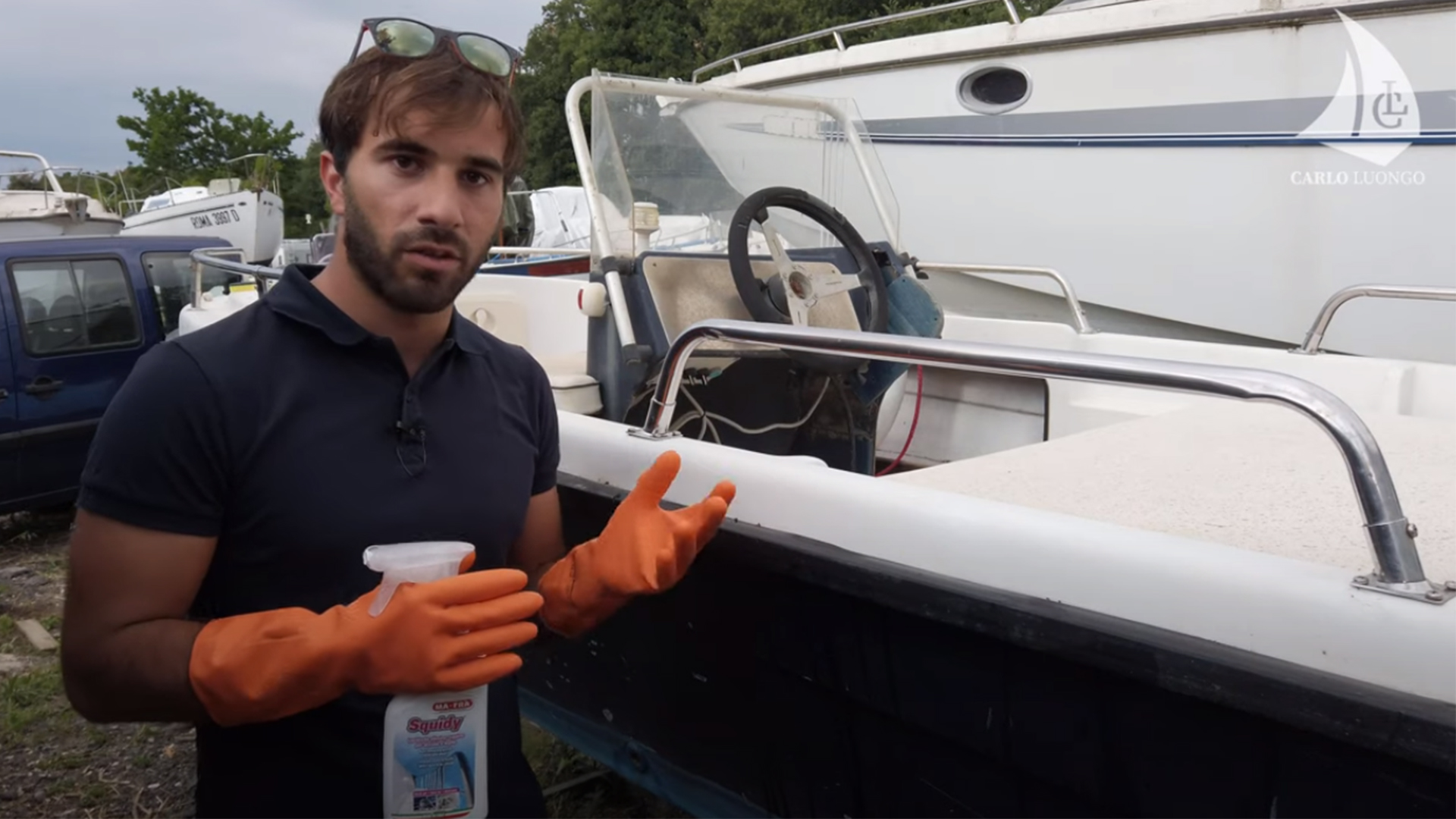
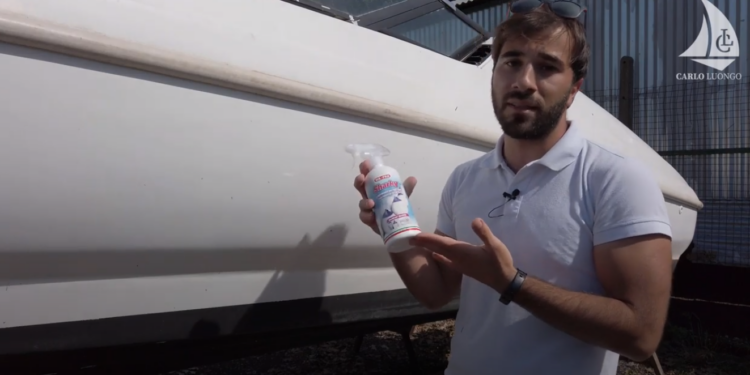
The protagonist of Carlo Luongo's third tutorial is Sharky, Mafra's special cleaner specifically designed for cleaning PVC surfaces, such as those often used for coping or fenders. Let's find out with Carlo Luongo how to use this product!
Coamings and fenders are essential for repairing the broadside from impacts, preventing damage that could ruin both the aesthetics and functionality of the boat. They are often made of PVC, a material that is easy to restore but requires the use of specific products. Precisely because of its protective function, this material is subjected to a lot of stress, getting scratched and ruined very easily. Also, because of the material's surface porosity, atmospheric dirt (smog, exhaust smoke and acid rain) is easily deposited, leaving that "shadowy" effect that ruins the boat's aesthetics. Fortunately for us, there is a Mafra product specifically for this surface: Sharky. Discover with Carlo Luongo how to clean Pvc with Sharky by Mafra!

Sharky 500ml
 Sharky is the detergent Ideal for restoring PVC and Skai surfaces, capable of effortlessly removing even the most difficult dirt. Thanks to the combined action of natural surfactants, it removes all kinds of dirt, including dirt generated by weathering and sludge from exhaust fumes. Available in 500 ml format and equipped with a trigger, Sharky has an action that does not alter the elasticity of PVC surfaces and can also be used on boat furnishings. The product non-greasy, non-sticky and free of chlorinated solvents. Use Sharky for early season restoration of your boat.
Find out in the video how to use Sharky
How to clean PVC of cooper and fenders? Find out how to use Sharky!
In the video, Carlo Luongo shows you how to clean PVC of boat coamings and fenders using Sharky and what wonderful results you can achieve with this cleaner.
Wet the surface
As also mentioned in Carlo Luongo's earlier videos devoted to Dolphy e Shelly, the first action to take is to wet the surface thoroughly. This cools the material and avoids unpleasant side effects. Note: Always remember that heat potentiates the action of detergents and, consequently, also the risk of unwanted reactions!

Apply the product
In the tutorial, Carlo Luongo acts on a cooper that has several black streaks and a lot of dirt caused by weathering. It is important to use a product that is not too aggressive because you could corrode the surface making it sticky to the touch, with the risk of soiling not only your own boat but also those of neighbors with whom it may come in contact. The advice is to act in well-defined areas by spraying it with the supplied trigger. On vertical areas, on which drips can form, or in places where there are areas where the product cannot be applied, the advice is to spread it with a sponge and not spray it.

Getting the product to act
After spraying the product leave it on for a few seconds. Do a few trials to figure out the optimal action time for the surface. This way, compared with a few minutes lost in the initial stage to test the best combination, you will then save time and effort!

Spread the product
After allowing the product to act for the necessary time, spread it over the surface, taking care to use the right sponge. A sponge that is too soft will be ineffective or will cause you to use up too much elbow grease; conversely, one that is too rough will tend to scratch and ruin the surface, encouraging dirt to settle faster. In the tutorial, Carlo used a classic soft-sided abrasive sponge, but you can also use a sponge equipped with a scratch-resistant net if necessary.

Rinse
Make sure the cleaner is completely removed by rinsing the treated surface and taking care not to leave any residue on the masonry and adjacent surfaces.

Evaluate the result
Check that the surface is restored properly and, if necessary, repeat the operation until the final result is achieved. The coop that Carlo Luongo worked on has a very ruined area and a white surface, which is why he used Wendy, the sponge with even higher cleaning power. This allowed him to speed up the cleaning process, restoring the surface to 100 percent.

Dry
After verifying that the result obtained is as desired, it is time to dry the treated area. For this operation, use a microfiber cloth, such as Heavy Work. In this way, you can remove residual traces of detergent and assess the actual state of the surface. In fact, you will eliminate reflections caused by water and can identify any dulling of the substrate.

Here is the result:
Once you have finished cleaning with Sharky you will get an unprecedented result. Here is a before/after of the PVC surface treated with the product!

Use Sharky for early season restoration of your boat
Discover the 500ml format
by Sharky

What are you waiting for?
Useful Tips
-
- Do not spray the product over the entire area but proceed in small areas. This will allow you to work best while keeping in check any unwanted reactions, such as discoloration or yellowing.
- Always test in a hidden spot if you do not know the substrate to be treated. It will help you better manage the application time.
- After applying Sharky to the cushions, it is recommended to use Marly to protect the skai surface. On pvc tubulars, however, it is necessary to use a wax such as Sealy.
- Always wear safety equipment, such as gloves and goggles, if working in windy conditions and use the trigger to apply the cleaner.
Did you miss Carlo Luongo's tutorials?
Missed a few episodes on Carlo Luonfo's boat cleaning and maintenance tutorials? Don't worry, we've got it covered! Here's where you can catch up on all the episodes:
Want to stay up to date with our promotions?
The best Mafra products with special discounts and unmissable offers are waiting for you. Sign up for our Newsletter to receive our discounts and stay updated on the world of Mafra! What are you waiting for?
Keep following us on our social channels for many more useful tips: