Published on: 01/06/2021 Updated on: 30/09/2025
How to clean fiberglass boat surfaces? Carlo Luongo explains.
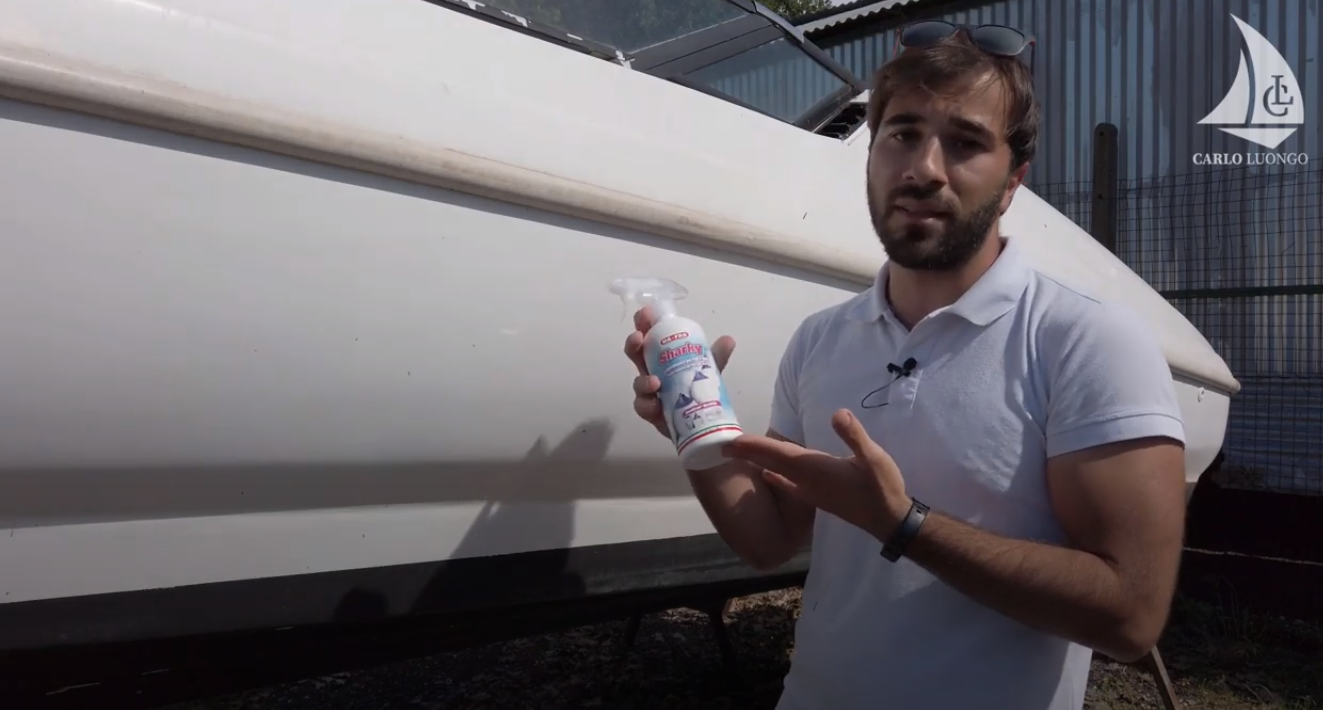
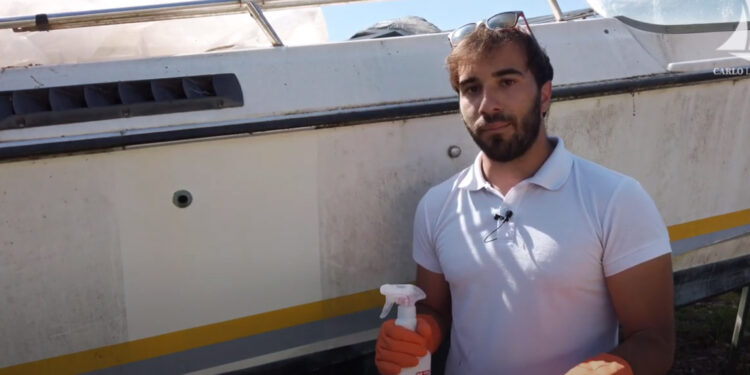
Dolphy is the star of Carlo Luongo's second tutorial. Learn with him how easy it can be to clean fiberglass surfaces with a product designed just for this material.
It often happens that people consider fiberglass to be a surface that requires no special attention from a maintenance point of view. Nothing could be more wrong! The "just clean it" philosophy is not good. Carlo Luongo's very tutorial shows how the surface of the deck and sides of a boat left outdoors for a long time has micro porosities where dirt gets in and not just any degreaser will remove it.
Don't trust common degreasers
With products that are too aggressive, the pores tend to enlarge and real microscopic cavities are formed that can no longer reflect light, causing it to lose that typical shine of a boat that has just left the yard. In the long run then, even if you remove the stains and remain "clean," the fiberglass will still look dull, and the risk is that you will have to resort to a polishing cycle (far more costly and tiring) or even have to repaint the surface. Thanks to Dolphy, cleaning fiberglass surfaces will be easy and the result amazing.

Learn how to clean fiberglass surfaces with Dolphy!
750 ml Dolphy is the concentrated professional product, with surfactants of vegetable origin, designed for the complete cleaning of the exterior and interior fiberglass parts of boats. Easily rinsed off, Dolphy easily removes all kinds of dirt, even the most resistant ones such as black lines caused by acid rain, organic residues from birds, exhaust fumes and residues from sunscreen creams and oils. Its balanced formula, enriched with Polarlite, a UVA-protective active ingredient studied by Mafra Laboratories, helps prevent gelcoat deterioration by polishing and brightening the fiberglass surface. Regular use of Dolphy keeps your boat looking like new longer and protects it from the damage that dirt, sunlight and sea salt can create. Dolphy Leaves no deposits and is non-aggressive, in fact, is inert on stickers and decors, leaves no trace on aluminum, rubber, teak and skai, and is also pleasantly scented.
How to use Dolphy
In Carlo Luongo's video you can find out how to use Dolphy to clean your boat's fiberglass surfaces!
Find out with him the correct procedure!
As always, the first tip is to avoid working with direct sun exposure. If this is not possible, then take care to always keep the surface cool by wetting it with plenty of water. The sun is the worst enemy for boat cleaning, as it causes the cleaner to over-act. If the product dries on the treated substrate, you risk staining the surface. Keeping it moist at all times, on the other hand, cools the paint and prevents the product from being too aggressive as the water dilutes it on the surface.
Now that you've made sure to cool the surface, let's see how Dolphy is used:
- He sprays the product on the area to be treated. In the video Carlo uses the 750 ml bottle and sprays it with the product trigger. However, if you have to work on a very large area, such as a boat deck, you can use the 4.5-liter can by pouring it into a bucket containing water and diluting the product, up to a maximum of 1:10, depending on the degree of dirt and then spreading it by helping yourself with a brush or sponge.

- Let the product sit for a few moments to give Dolphy time to loosen the dirt and facilitate the next step, but be careful that the surface remains moist at all times. Remember, the longer you leave the product on the surface the less effort the scrubbing will require.

- Arm yourself with elbow grease and proceed to scrub the surface to permanently remove the stains. If you are working in the sun help yourself with the water hose, work in small areas and keep them moist at all times, this way you prevent the water from evaporating causing the dirt to stick to the fiberglass again.

- After scrubbing the surface well, rinse thoroughly and make sure it is perfectly clean. If there are more stains, increase the concentration of Dolphy or leave it on for longer. On surfaces painted white and smooth (such as masonry) you can use the sponge Wendy to make the job easier.

- Finally, dry with a microfiber cloth such as Heavy Work. You will then avoid finding traces of lime scale present in the rinse water and be sure that all soap is removed from the treated area.

At the end of the job put on your sunglasses and enjoy your restored surface!
Discover the format
Dolphy's concentrate

Dolphy is available in 4.5L size
What are you waiting for?
Practical tips for the proper use of Dolphy:
- The product is a detergent designed for cleaning. If the surface is oxidized and dulled, it will not be restored simply by washing it.
- It is not suitable for removing rust drippings or yellowing. For these types of stains Mafra has designed two special products, Squidy for removing rust from steel and alloys, and Waterline Clean to keep the waterline clean and shiny.
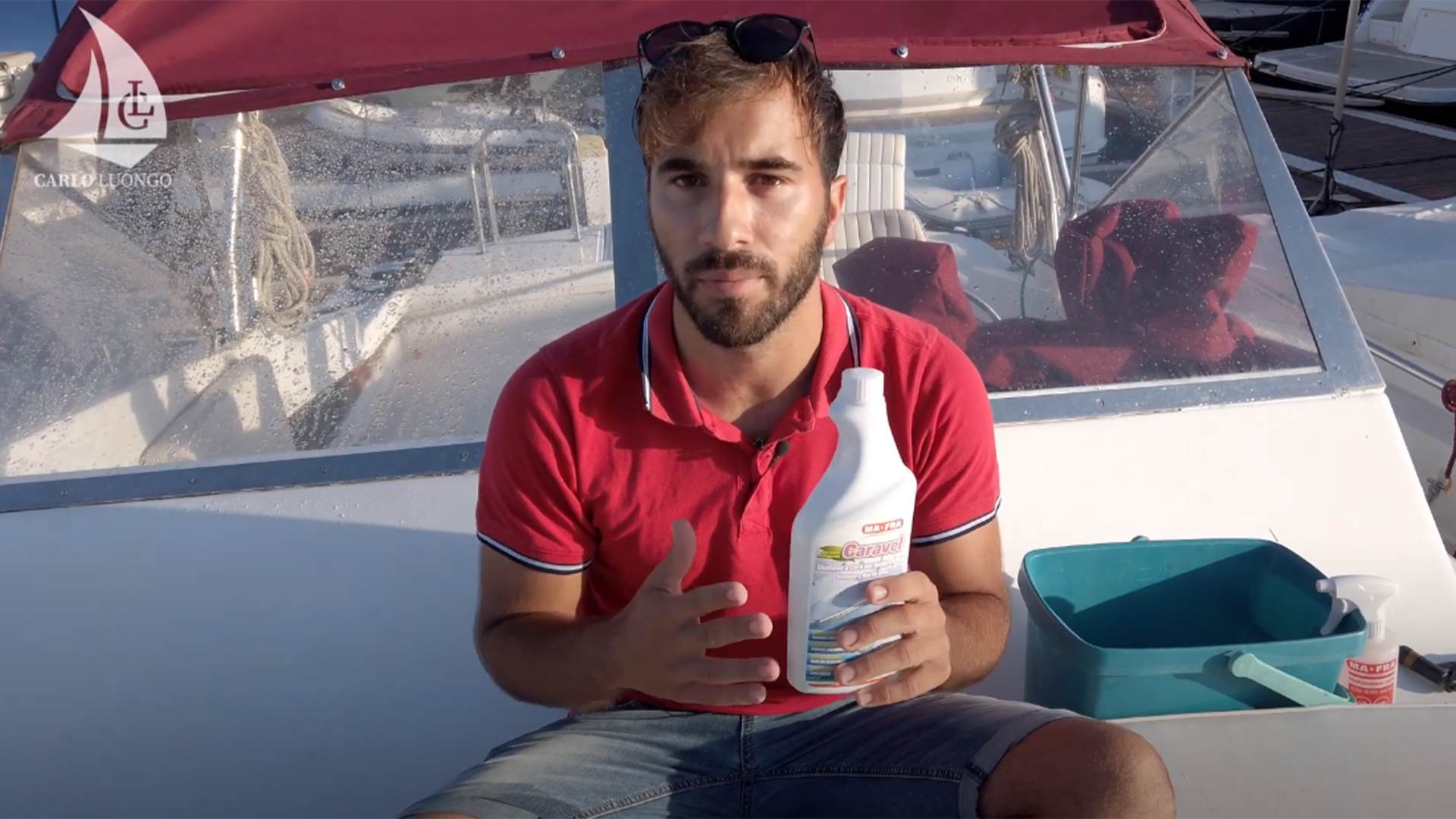
- Dolphy is suitable for restoration and vigorous cleaning. For weekly washings, it is recommended to use Caravel since it can also provide the surface with a layer of protection.
Did you miss Carlo Luongo's tutorials?
Missed a few episodes on Carlo Luonfo's boat cleaning and maintenance tutorials? Don't worry, we've got it covered! Here's where you can catch up on all the episodes:
Want to stay up to date with our promotions?
The best Mafra products with special discounts and unmissable offers are waiting for you. Sign up for our Newsletter to receive our discounts and stay updated on the world of Mafra! What are you waiting for?
Keep following us on our social channels for many more useful car care tips: