Published on: 18/03/2025 Updated on: 20/03/2025
Keeping your car's alloy wheels clean helps you maintain their aesthetic features and value over time. If you, too, want to keep your vehicle looking flawless at all times, here are some useful tips to optimize alloy wheel cleaning and achieve results comparable to professional interventions. Follow our step-by-step guide you find by continuing to read this article.
Why is it important to clean alloy wheels?
Tires and rims are always in contact with dirt, debris, and other contaminants, which come both from the road surface and from elements harmful to the rim such as those generated by the action of brakes on the pads, e.g., ferrite, ferrous residue, and oily substances.
Over time, the surface of rims is subject to corrosion and permanent stains that compromise their aesthetics. By cleaning alloy wheels frequently, you can preserve their beauty and value, as well as avoid costly maintenance or, in the worst cases, replacement of the part.
DIY alloy wheel cleaning vs. professional service
Many motoring enthusiasts like to take personal care of cleaning their vehicles, including alloy wheels. Whether you are part of this group or prefer to turn to professionals who specialize in cleaning and decontamination, it is important to know at least the basic aspects of alloy wheel cleaning.
The products and processes, in fact, differ depending on the option chosen, just as the advantages and disadvantages differ in both do-it-yourself cleaning and professional intervention.
Cleaning alloy wheels and bodywork performed independently first requires an adequate space for the operation, with sufficient air circulation.
In addition, the level of cleanliness and decontamination guaranteed by a professional may be more difficult to achieve when washing the car yourself, not to mention the risk of scratches and other unsightly marks that could be caused to the bodywork and wheels if not done properly.
The advantage of do-it-yourself cleaning is definitely the lower cost compared to professional washing, not to mention the flexibility in terms of schedule: you do not need to make an appointment, and you can decide to proceed compatibly with your personal schedule. With a little experience and paying attention to the instructions for use, optimal results can be achieved.
Fortunately, MA-FRA offers several products for cleaning alloy wheels, ideal if you want to take personal care of your car and ensure thorough cleaning and decontamination. These are products originally designed precisely for professional uses in car washes, so with just a few simple steps you will be able to achieve results comparable to those guaranteed by professionals in the field. In this article we will show you how to carry out the cleaning of your alloy wheels using the best products and procedures, for a DIY cleaning with a professional result.
Best deals on cleaning products for alloy wheels
On the MA-FRA store, you'll find a great selection of cleaning products for your car, designed to help you achieve professional results and maintain the beauty of your car for a long time. Here are the best deals you'll find on the store.
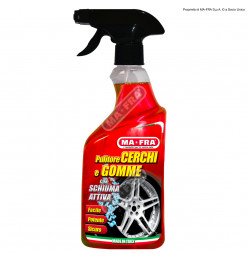
Rim and Tire Cleaner
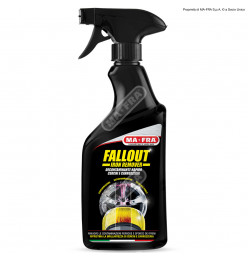
Fallout Iron Remover 500ml
Materials needed for perfect cleaning of alloy wheels
To ensure perfect cleaning of alloy wheels you will need some essential accessories to thoroughly clean all surfaces but without leaving halos or, worse, scratches.
Never perform wheel and body cleaning indoors, and especially do not do it with bare hands!
In short, you will need:
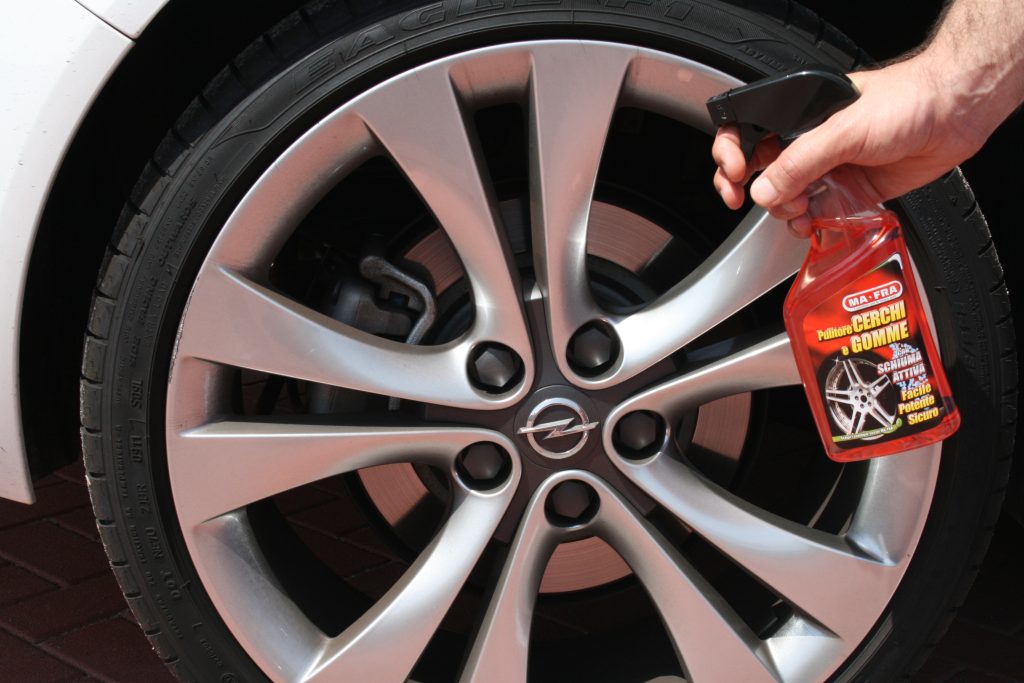
- Specific cleaner for alloy wheels: MA-FRA products, such as the Rim and Tire Cleaner are pH neutral. In particular, Rim and Tire Cleaner is perfect for cleaning alloy wheels also because of its 2-in-1 action.
- Red Brush: ideal for reaching the most difficult corners, made of high quality materials so as not to scratch the rims.
- Access to a clean water source to rinse the circles during the process.
- Protective gloves to protect hands from chemicals.
- Microfiber cloth: the Heavy Work cloths are perfect for drying without leaving halos.
To these, we recommend that you add one or two of the best car cleaning brushes, also in different sizes depending on the shape of your alloy wheels.
How to clean encrusted alloy wheels: step-by-step guide
If you want to remove fouling from your alloy wheels effectively, follow this procedure, taking great care to use brushes and cloths appropriate for the purpose to avoid unsightly scratches and marks on the surfaces being treated.
Of paramount importance is to check that the product you have chosen is suitable for the type of rims in your car. For example, the Rim and Tire Cleaner by MA-FRA recommended in this article should absolutely not be used with aluminum, anodized and motorcycle rims.
Step 1 - Preparation
- Park the car in a shady area, as direct sun can dry the products too quickly, resulting in staining.
- Remove surface dust with low-pressure water.
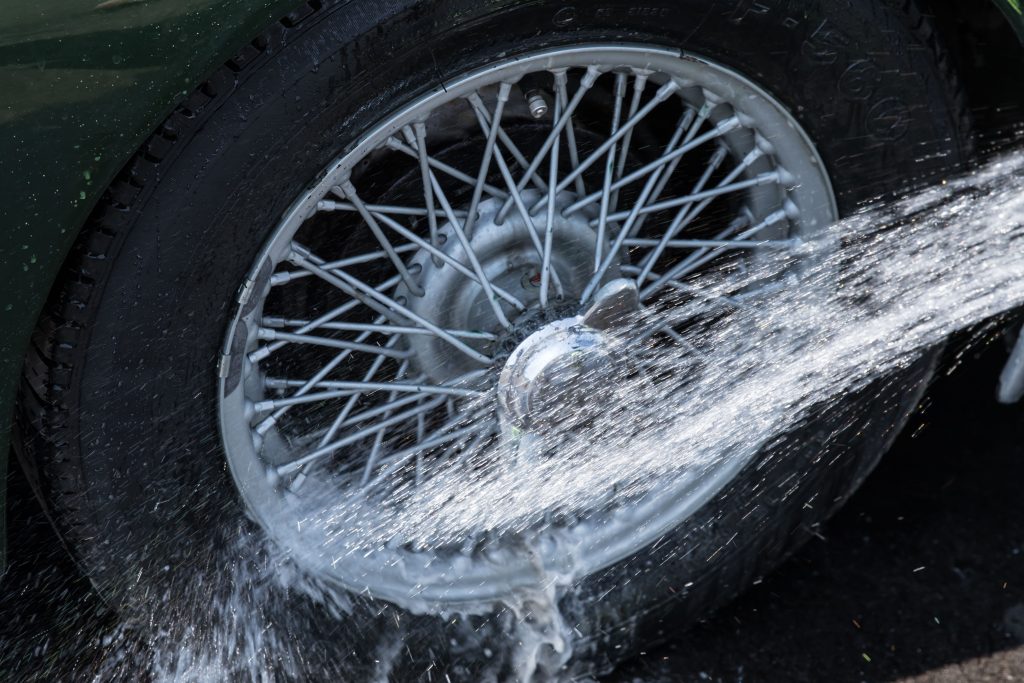
Step 2 - Application of detergent
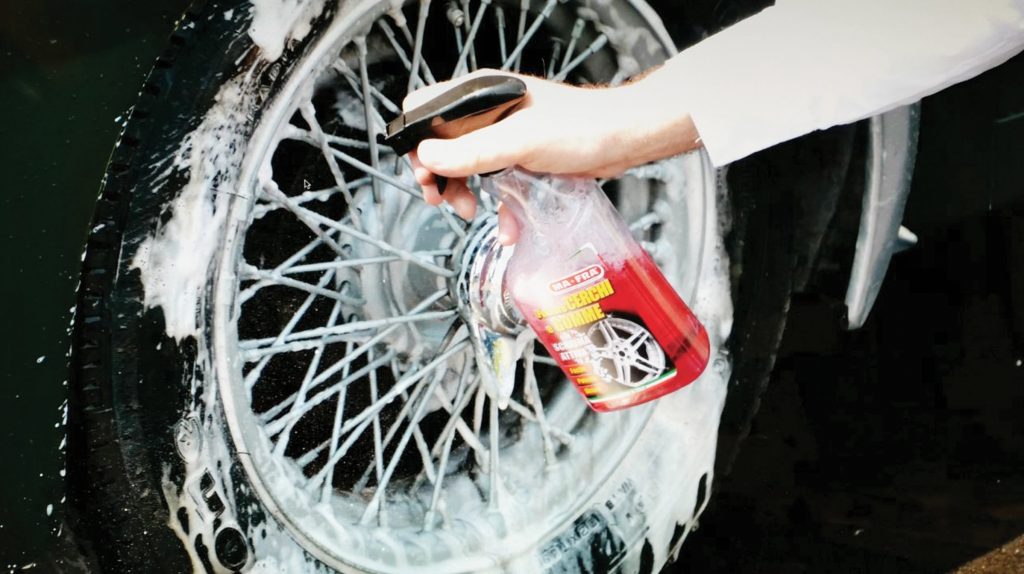
- Spray the specific cleaner directly on the rims, making sure to cover all areas. In the case of the Rim and Tire Cleaner, the product can be dispensed in two different modes. To clean the rim, use the misting mode, covering the entire affected surface.
- With foam mode on, you can clean tires and rim spokes where dirt settles most easily and is stubborn.
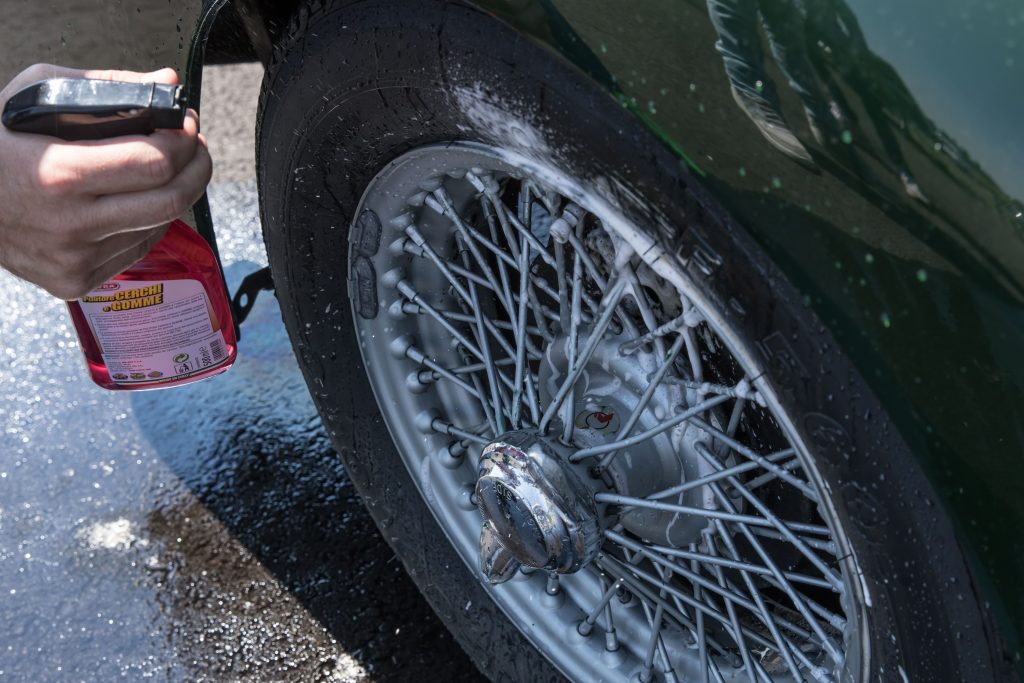
- Leave on for the time indicated on the package (e.g., 1 minute in the case of the Rim and Tire Cleaner) to loosen stubborn dirt on both the rim and the tire. The important thing is not to let the product dry on the surface. If you notice that it is drying, spray again.
Step 3 - Mechanical action
- Use a red car detailing brush with soft bristles to gently treat the surface.
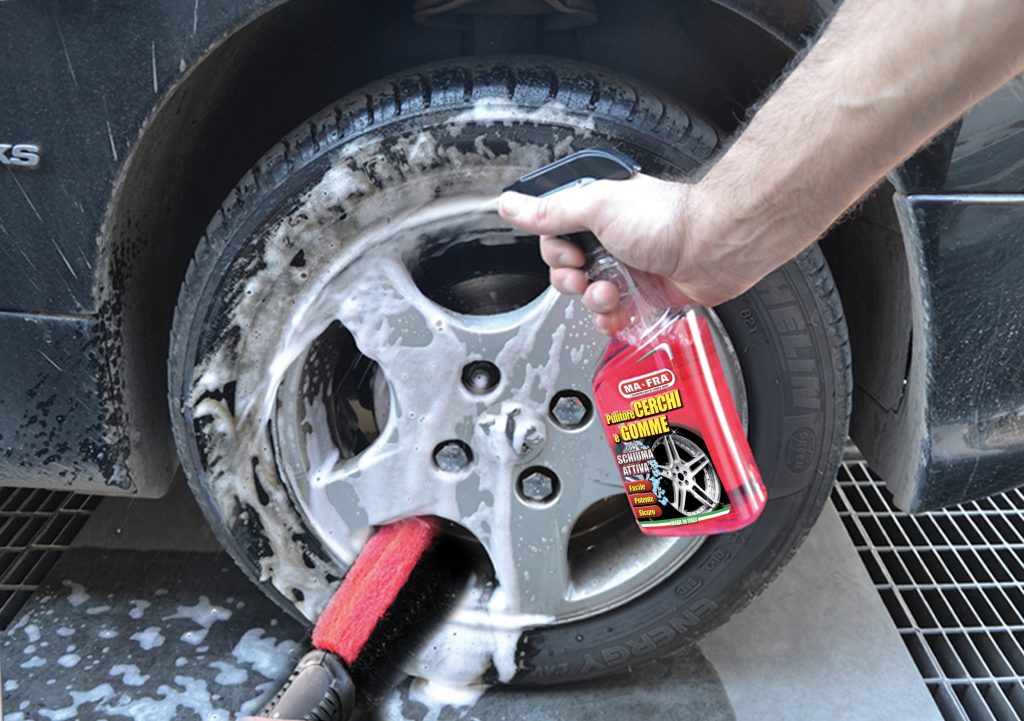
- Pay special attention to the corners and areas near the wheel nuts.
Step 4 - Rinse
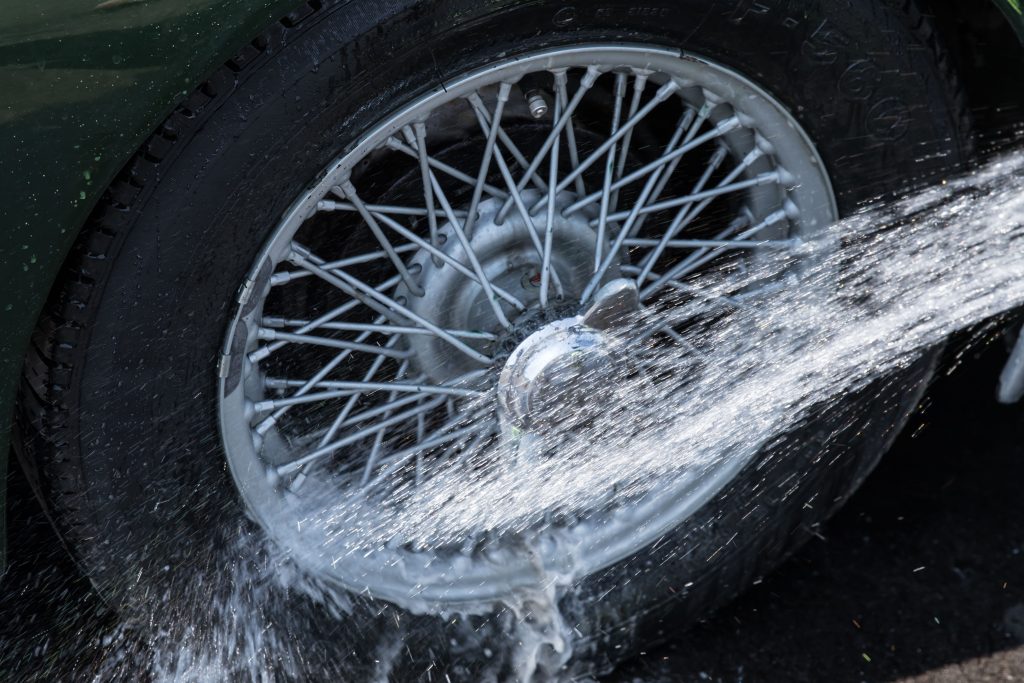
- When the foam turns a hazel color, rinse thoroughly with clean water to remove all detergent residue and dirt.
Step 5 - Drying
- Use a microfiber cloth to dry the circles to make sure the water does not leave stains.
How to clean black alloy wheels
Alloy wheels in black coloring give cars an aggressive and eye-catching sporty look, but special attention should be paid to their cleanliness.
In fact, black alloy wheels require some special care to maintain their flawless appearance and prevent damage to the finish.
You should first choose a nonaggressive product, preferably one with a neutral pH, and carry out washing away from sources of direct sunlight to avoid the formation of unpleasant halos. We recommend that you try the product on a small, poorly exposed area before cleaning the entire rim.
Even more care needs to be taken when choosing microfiber brushes and cloths: if they are too hard or abrasive, marks on rim surfaces will be even more visible. MA-FRA brushes and cloths are designed and manufactured to ensure professional quality and respect for the surfaces being treated. As we mentioned above, the Red brushes and the cloths Heavy Work will allow you to complete the cleaning of your car without the risk of scratching the rim. A key aspect of achieving flawless results.
Compared to other types, black alloy wheels require more frequent washing, as dirt will always be more evident.
With proper care, however, your car will always look flawless. The steps to follow are the same as we showed you in the paragraph above.
How can I clean alloy wheels from ferode and ferrous residue?
Ferode and ferrous residues are contaminants that are formed as a result of brake application, but not only. In fact, contaminants can come from friction exerted on railroad tracks or emissions from factories.
Since these are very volatile agents, no car is immune to them. Normal detergents are ineffective in treating this type of dirt. For this reason, MA-FRA has developed Fallout Iron Remover, our decontaminant specifically for the removal of iron residues.
The formulation of Fallout causes residues to bind to the product for safe and effective rinsing. In addition, the acid-free and fast-acting formula ensures outstanding results on par with professional treatments.
Fallout Iron Remover 500ml
We recommend that you use this decontaminant every 3,000 miles or so, or in any case, when you have finished cleaning with the Rim and Tire Cleaner, you still notice brown specks on the rim.
In addition, frequent cleaning of the rims will prevent the accumulation of ferrous contamination, reducing the time required for cleaning. What's more, Fallout also ensures more effective application of a protectant, since it promotes its adhesion.
Using the Rim and Tire Cleaner for maintenance cleaning in combination with Fallout, your alloy wheels will always look perfect and free from stubborn contamination.
Savings formats are also available of both products: Rim and Tire Cleaner can be ordered in a 4,500 ml bottle, while Fallout is sold in 1 L and 4,500 ml bottles.
How to use Fallout Iron Remover?
To decontaminate the circles:
- Spray Fallout Iron Remover on the rims and let it work for 3-4 minutes without drying. The product will turn a purplish color on contact with the iron.
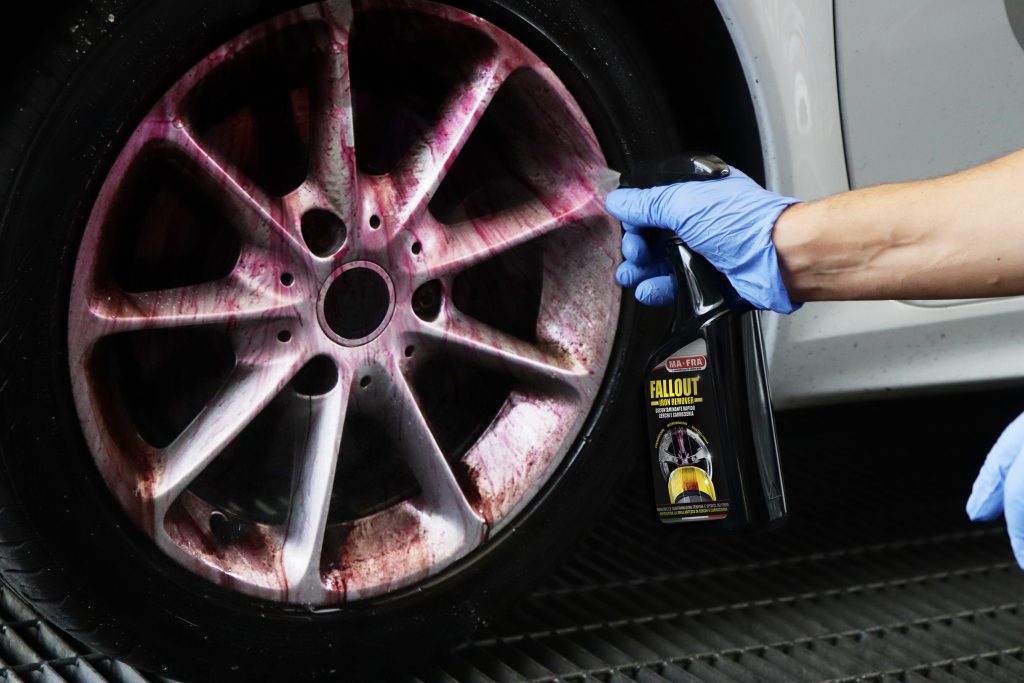
- Use a soft brush such as Red to clean between the rays and rinse thoroughly.
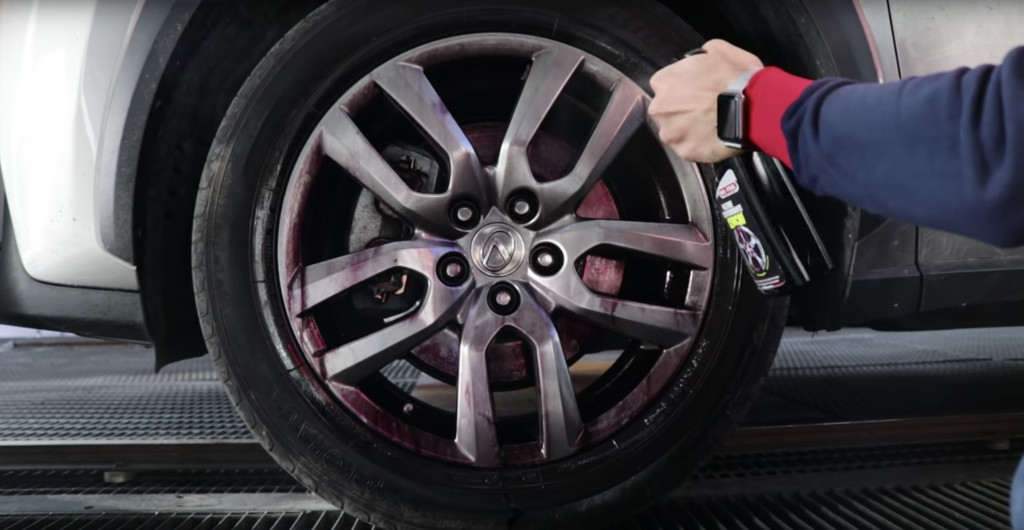
- After 2-3 minutes, when the product turns brownish from purple, rinse thoroughly and dry with a microfiber cloth.
As we said, you can check the effectiveness of the product by observing the chemical reaction: the purple color indicates that the ferrous particles have been neutralized. When the color changes from purple to brown, it is time to rinse the product.
As an added benefit of this treatment, you can also protect your car from future damage caused by corrosion.
Tricks for flawless cleaning of rims and wheels
To clean alloy rims and wheels and get the best results, you can take some steps that will not only make it easier for you to clean them later, but also help prevent future mishaps.
First, it is important to clean the rims regularly so as to prevent the buildup of residue and scale. The advice is to use Rim and Tire Cleaner once a week, while Fallout can be applied as needed.
Also, you should avoid using brake pads that are too worn. Replace them at the appropriate time, this way you can avoid excessive production of dust and ferrous residue that will damage rims and bodywork in the long run..
Mistakes to avoid when cleaning DIY alloy wheels
As we have had occasion to point out, the choice of brushes and cloths suitable for cleaning alloy wheels is as important as the products to be used.
Fibers that are too hard and rough leave indelible marks on bodywork and rims. Replace brushes when they begin to harden, and always make gentle strokes without rubbing too hard.
When you wipe the microfiber cloth, make gentle motions by lightly rotating the surface of the cloth until it separates from the surface of the spot you are drying.
Drying itself is critical: do not leave the car still wet in the sun's rays. Before completing the cleaning, make sure the rims are perfectly dry.
By following these simple steps, you will prolong the life of alloy wheels, keeping them flawless at all times, with results comparable to professional interventions.
-
How often should I clean my car's alloy wheels?
It is advisable to clean them at least once a week to prevent the accumulation of dirt and brake pad residue.
-
Can I use a regular cleaner or degreaser to clean alloy wheels?
It is best to use a cleaner specifically for alloy wheels with a neutral pH to avoid surface damage. Often, detergents and degreasers that you use at home have a poor cleaning effect and a pH that is not suitable for surfaces as sensitive as those of the car.
-
What tools are essential for effective cleaning?
A suitable rim cleaner, a high-quality microfiber cloth, and a protective sealant are essential. In some cases it is useful to use soft brushes to treat particularly hard-to-reach areas or remove stubborn stains.
-
What should I do if the rims have scratches or signs of corrosion?
See a professional for repair; specific products can mask small marks, but not fix deep damage.
-
Can I clean alloy wheels with degreaser?
Because of their chemical composition, degreasers can damage the rim's finish. We recommend that you opt for a product specifically designed for cleaning alloy wheels.
-
Oxidized alloy wheels: how to clean them?
If oxidation is advanced, it is best to seek professional help. The oxidation may have affected the rim's clear coat.