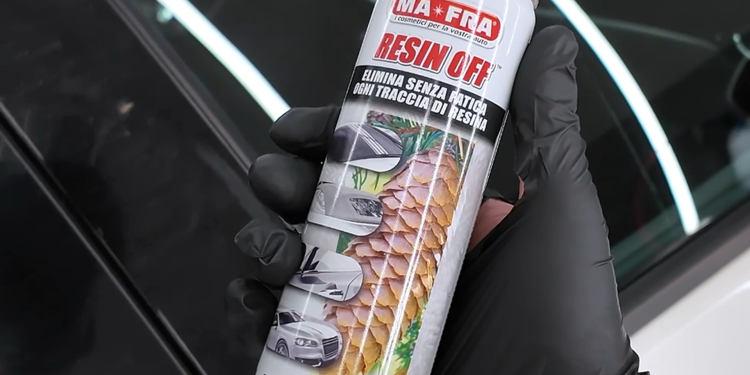
In this guide, we'll explain how to remove tree sap from your car's body—a delicate but essential task for maintaining your car's appearance.
Tree sap is one of the most troublesome problems for the careful driver. When it lands on a car’s body, it embeds itself deeply and becomes difficult to remove without damaging the paint. This guide is designed to help you remove tree sap from your car’s body step by step, while protecting your car’s appearance and integrity. We’ll show you not only the most effective methods but also how to prevent this problem from happening again.
What Is Resin, and Why Is It So Hard to Remove?
Resin is a natural substance secreted by trees (particularly pines, firs, and conifers) as a defense mechanism. It appears as a viscous liquid that solidifies rapidly when exposed to the open air, trapping insects and pests that could be harmful to the plant itself. The problem stems precisely from its composition: it is thick, sticky, and, once hardened, chemically bonds to any surface it comes into contact with.
This adhesion is not merely superficial. The resin can penetrate micro-scratches in the paint and become nearly impossible to remove without abrasives or chemical solvents. Furthermore, the resin’s light or transparent color makes it difficult to spot right away, giving the substance time to damage the clear coat on the car’s body.
In addition, its composition is oily and resinous: it repels water, rendering normal car washes ineffective. That’s why a simple spray of water or a quick wipe with a sponge isn’t enough to remove it. You need a targeted, patient approach—and, above all, the right tools.
Why Resin Is the Enemy of a Car's Bodywork
Resin is an organic substance produced mainly by trees such as pines and firs. When it falls onto a hot surface, such as a car, it tends to stick quickly to the paint and windows, becoming increasingly hard and difficult to remove over time. If left untreated, it can crystallize and act like an abrasive glue that damages the underlying surface.
The resin contains natural acids that, when they come into contact with the car’s body, slowly begin to corrode the paint’s protective coating. Within a few days—especially if exposed to the sun—it can leave permanent marks. If you try to remove it using the wrong methods, such as scraping it off with sharp objects, you risk causing even more damage.
Another pitfall? The resin attracts dust, smog, and other impurities, making the area even dirtier and duller. Furthermore, if it gets on the windows, it can impair visibility while driving, especially in backlit conditions.
Taking prompt action is therefore essential. And knowing the right methods and tools to remove it can really make a difference.
Prevention: How to Keep Resin from Sticking to the Car Body
Prevention is always the best cure. And this also applies when it comes to tree sap on cars. First of all, you need to be mindful of where you park. Be sure to avoid:
- Park under pine trees, fir trees, and other conifers.
- Areas near public parks or urban woodlands.
- Unpaved parking lots with many trees nearby.
Instead, choose:
- Garages or covered parking spaces, including temporary ones.
- Well-ventilated areas that are far from vegetation.
- Areas free of trees during the hottest hours of the day (when the resin is most fluid and drips easily).
It’s also a good habit to inspect your car every evening or after it has been parked outdoors for an extended period. As soon as you notice a suspicious drop, it’s best to take action right away, before it dries.
Differences Between Fresh and Dried Resin
Not all tree sap is the same. Fresh sap is pliable, shiny, and still sticky: it can be removed more easily with a cloth and a mild cleaner. However, if it remains on the surface for days or weeks, it dries out, hardens, and becomes a real challenge to remove. At that point, a simple damp cloth won’t be enough: you’ll need more specialized products and a little patience.
It’s important to know the difference between fresh and dried resin in order to choose the right method. MA-FRA has developed a specialized solution: Resin Off, which we’ll introduce below.
What Is Resin Off and Why Does It Work?

Resin Off is an innovative product specifically designed to remove resin and salt deposits from a car’s body and windows. This solution has been formulated to ensure high effectiveness without damaging the treated surfaces. That’s why it’s also ideal for hardened and crystallized resin—the kind that seems virtually impossible to remove.
Its secret lies in its balanced chemical composition: it works by dissolving the resin, but does so gradually and gently, without damaging the car’s paint or clear coat. It is therefore also suitable for those with new vehicles or cars with special paint finishes.
Another advantage? It’s extremely easy to use, and you don’t need any special tools—just a microfiber cloth; we recommend Heavy Work. A 250-ml can is enough to treat several stains. And best of all, it leaves no oily residue and doesn’t require long drying times.
Those who have tried it confirm how convenient it is: no streaks, no risk of damaging the paint, and the assurance of visible results right from the first use.
How to Use Resin Off, Step by Step
Using Resin Off is a breeze, but to get the best results, it's important to follow the correct steps:
Step 1: Prepare the surface
- Make sure the car is in a shaded area.
- The surface must be cool—not exposed to the sun or hot to the touch.
Step 2: Shake and apply
- Shake the can well.
- Spray Resin Off directly onto the resin, making sure to cover the entire stain thoroughly.
Step 3: Let it sit
- Wait about 1 minute. The product will begin to soften the resin.
- For the toughest stains, you can wait up to 2 minutes.
Step 4: Remove
- Use a soft microfiber cloth, such as Heavy Work.
- Gently wipe it down without rubbing.
- If necessary, repeat the process until it is completely removed.
Step 5: Final Cleaning
- Wash the treated area with lukewarm water and shampoo.
- Dry it with another clean, dry microfiber cloth.
That's it! Your car's paint will be shiny again, with no streaks or residue. Resin Off also works great on windows—just follow the same procedure. And, unlike other solvents, it doesn't require any special precautions to protect your hands or respiratory system.
Advantages of Resin Off Compared to Other Products
When comparing Resin Off to traditional methods, the advantages are immediately apparent:
- Effective on all types of resin: fresh, dry, or crystallized.
- Gentle on paint: does not damage even the most delicate surfaces.
- Ease of use: It requires no special tools or techniques.
- Safety: No pungent odor, non-toxic, non-flammable.
- Versatility: It works on both the car body and the windows.
- Time-saving: It works in just 1 minute.
Is the resin too crystallized? The solution is MA-FRA Clay Bar
For those who love professional-grade car care, the MA-FRA clay bar is an extraordinary tool. It is a block of synthetic clay that removes even the toughest contaminants from the paint, including tree sap.
Here's how to use it:
- Wash the car thoroughly to remove dust and dirt.
- Spray a specialized lubricant, Fast Cleaner 3-in-1, onto the affected area.
- Move the clay bar back and forth using light, straight strokes.
- Every now and then, fold and knead the clay to keep the surface clean.
- When you're finished, dry it with a microfiber cloth and apply a protective wax.
Clay bars are also very effective at removing other contaminants such as tar, light oxidation, and industrial residues. The only thing to keep in mind is to always use a lubricant to avoid scratching the surface. The advantage? Not only do you remove tree sap, but you also leave the paint as smooth as new.
Products You Should Not Use to Remove Tree Sap from Your Car
When it comes to removing resin, it's essential to know not only what to use, but also what to avoid at all costs, so as not to turn a minor problem into a cosmetic disaster.
Products to avoid:
- Gasoline: aggressive, corrosive, and dangerous to delicate surfaces.
- Acetone: It dissolves paint and can cause permanent stains.
- Bleach: highly corrosive, not only to the car's body but also to the windows.
- Kitchen cleaners: They often contain degreasing agents that are too harsh for car paint.
- Sharp objects (metal scrapers, razor blades): These cause deep, permanent scratches.
Although some of these remedies may seem effective in the short term, they cause greater damage in the long run. A car’s body is protected by a very thin transparent layer, and it doesn’t take much to damage it beyond repair.
It's always best to choose methods specifically designed for the automotive industry, such as Resin Off, which guarantee risk-free results.
Aggressive techniques that damage the car's bodywork
The urge to immediately remove an annoying resin stain can lead many people to resort to brute force, but that’s exactly when damage occurs. Scrubbing with too much pressure or using abrasive sponges or unsuitable scrapers can permanently damage the paint.
Examples of techniques to avoid:
- Dry scrubbing: causes micro-scratches.
- Using steel wool: Although it’s effective on resin, it literally scrapes away the paint.
- Spraying strong solvents and letting them sit for too long will burn the clear coat.
- Use the direct jet setting on the pressure washer: if the pressure is too high, it can peel off the paint.
The guiding principle is simple: proceed with patience and care. If the resin is stubborn, it’s better to repeat the treatment several times rather than look for shortcuts that will end up costing more at the body shop.
How to Remove Tree Sap from Windows and Windshields
Resin often doesn't just stick to the body of the car—it also ends up on the windshield and windows, creating those annoying little spots that reflect light and impair visibility. Fortunately, glass is more durable than paint, so you can use slightly more aggressive methods.
Recommended method:
- Clean the glass with a specialized cleaner, such as Glass Cleaner, and a clean microfiber cloth, such as our Glass cloth.
- Apply Resin Off to the resin
- Let it sit for 1 minute.
- Remove the resin with a Heavy Work cloth.
- Repeat if necessary.
- Dry with a clean microfiber cloth to prevent streaks.
Avoid using:
- Metal scrapers
- Abrasive sponges
- Strong solvents
Once you've removed everything, you can also apply a water-repellent treatment or glass polish to protect the surface and make future cleaning easier.
The Use of Waxes and Protective Sealants
In addition to parking, another excellent way to prevent resin damage is to pre-treat the car’s body with protective products. Car waxes and sealants create a barrier between the paint and external elements, making the surface smoother and more stain-resistant.
Applying one of these treatments regularly means that any resin droplets won't immediately soak into the paint and will be much easier to remove.
Windows can also be treated with water-repellent products or protective polishes, which help protect against tree sap, rain, dust, and insects.
When to Consult a Professional
If the resin has damaged the paint, seeped into the pores of the bodywork, or if you’ve tried several times without success, it’s time to call a professional. An experienced detailer has the tools, products, and expertise to handle even the most complex cases.
Situations in which it's best to consult an expert:
- Resin that has been dry for weeks or months.
- Surfaces that have become dull or scratched from attempts to remove the substance.
- Luxury cars or cars with delicate paint finishes.
- Glass with permanent streaks.
The cost may seem high, but it is much lower than completely repainting a panel or repairing damaged glass.
Removing tree sap from your car’s body may seem like a complicated task, but with the right tools and a little patience, it becomes a simple process that anyone can do. Natural methods work well if you act right away, but once the sap hardens, using a specialized product like Resin Off really makes a difference.
We’ve gone over everything you need to know: from DIY remedies to mistakes to avoid, including the best products on the market. Your car deserves to be protected and cared for, and it is possible to prevent resin damage. All it takes is a little care and a few extra precautions when parking.
Always keep a good tree sap remover on hand, and don't forget to protect your car's paint with wax or a sealant. That way, you can enjoy your drive… without worrying about trees anymore!
-
How can I remove tree sap without damaging the paint?
Use specific products such as Resin Off. Do not use strong solvents or abrasive materials.
-
Is Resin Off effective even on old resin?
Yes, Resin Off is formulated to work even on crystallized and dried resin, dissolving it without damaging the paint.
-
How long does it take for Resin Off to remove the resin?
It works in about 1 minute. For stubborn stains, you can repeat the process several times.
-
How long do I have to remove the resin before it damages the car's body?
Ideally, within 24–48 hours. The more time that passes, the deeper the resin penetrates and the more it hardens, increasing the risk of damage.
-
Can I use a clay bar to remove resin?
The MA-FRA Clay Bar is an excellent decontaminant and can help you remove tree sap from your car without damaging the surfaces.