Published on: 22/08/2025 Updated on: 18/11/2025
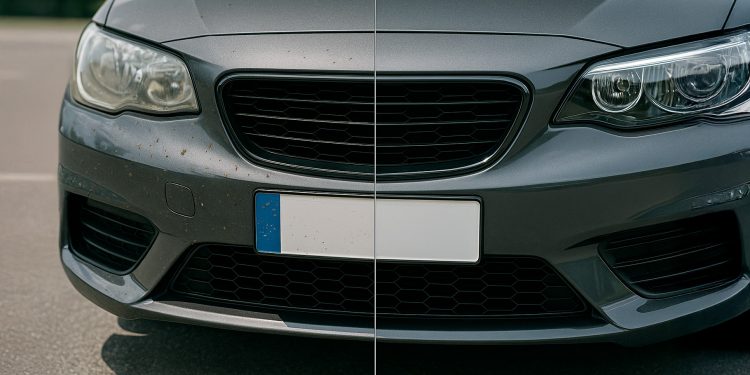
Insect residue adheres tenaciously to the hood and windshield, and if neglected can cause micro-scratches, corrosion of the clear coat, and persistent staining. Early intervention is critical to preserving the shine and integrity of the finish, avoiding damage that is difficult to correct later. In this comprehensive guide, you'll discover everything you need to know to effectively remove bugs from your car, keeping it shiny and protected over time.
Why it is important to remove insects from the car
Insects are not only annoying, they are also silent enemies of paint. When they hit the bodywork at high speeds, their bodies burst open, releasing highly corrosive acids and internal fluids. If left for days or weeks, these residues penetrate the protective clear coat and begin to corrode the underlying paint. The result? Dull spots, discoloration and in some cases even micro-scratches. Especially in the warm months, exposure to the sun accelerates this process, making timely cleaning even more urgent.
Insects completely ruin the visual appearance of the car, making it look neglected and dirty. No matter how clean the interior is, if the exterior is stained with organic remains, the overall impression will always be negative. Those who really care about their car cannot ignore aesthetics, and insect removal is a crucial step in keeping it looking good at all times.
A windshield full of bugs seriously impairs driving visibility, especially at night or in rainy weather. Windshield wipers often fail to remove them completely, leaving halos and spots that reflect the light from headlights, making driving more dangerous. It is therefore also a matter of safety: seeing well is essential, and clean glass means better concentration and quick reaction to sudden obstacles.
At this point, the important question is "when to intervene?" The answer is very simple: as quickly as possible. In fact, within 48 hours, insect residues manage to penetrate the clear coat, generating virtually indelible stains. The only solution, in this case, is polishing.
The best bug remover from the car: Insect Remover from Maniac Line
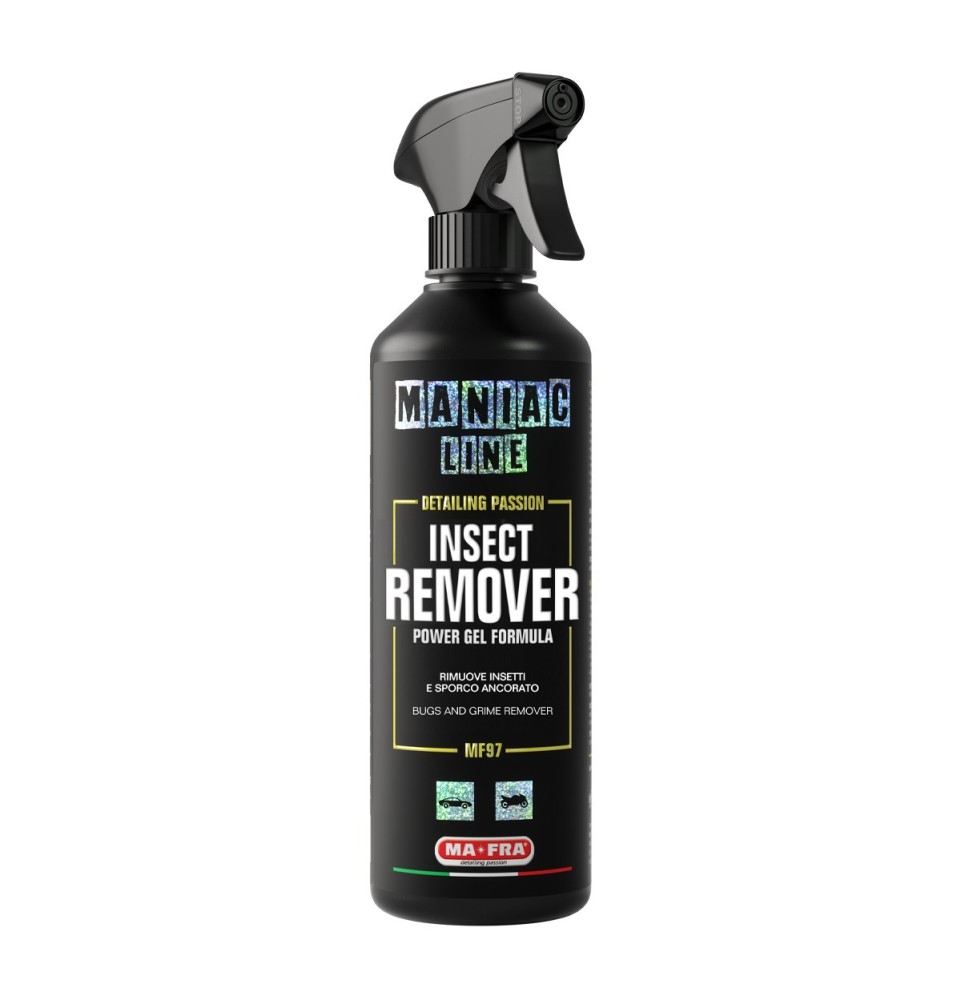
Insect Remover - Maniac Line For Car Detailing
Insect Remover by Maniac Line is one of the most advanced and popular products in the world of car detailing. It is specifically designed to address one of the most annoying problems for any enthusiast: removing insects from the car. And it does it safely, effectively and easily.
Unlike ordinary cleaners, it has an innovative gel formulation that ensures slow drying and prolonged adhesion of the product to the surface of the car. This means that the product does not slip off immediately after application, but remains "active" for as long as it takes to dissolve even the most stubborn insect residues.
It is safe on all surfaces-from bodywork to headlights, through glass, chrome, plastics Unlike other similar products, Maniac Line's Insect Remover can be used safely on any type of sealant or coating, ensuring complete protection of your vehicle. It will not dull, stain or discolor.
In addition, during a more intensive cleaning process, it proves to be an outstanding aid in removing old and heavily accumulated dirt, working with a sponge or brush.
How to use Insect Remover with pressure washer
Using Maniac Line's Insect Remover with a pressure washer is one of the most effective and quickest ways to remove insects from your car. This system harnesses the power of water pressure combined with the effectiveness of the cleaning gel, with amazing results on even the most stubborn stains.
Here are the three basic steps to follow:
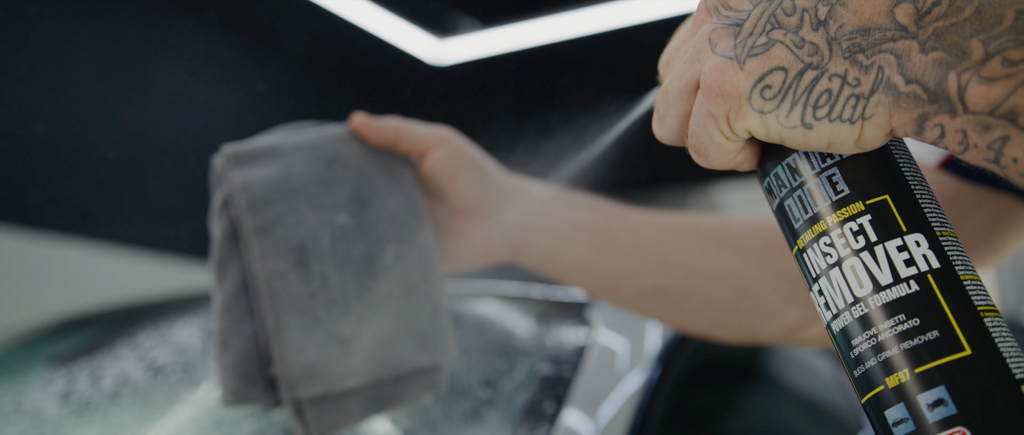
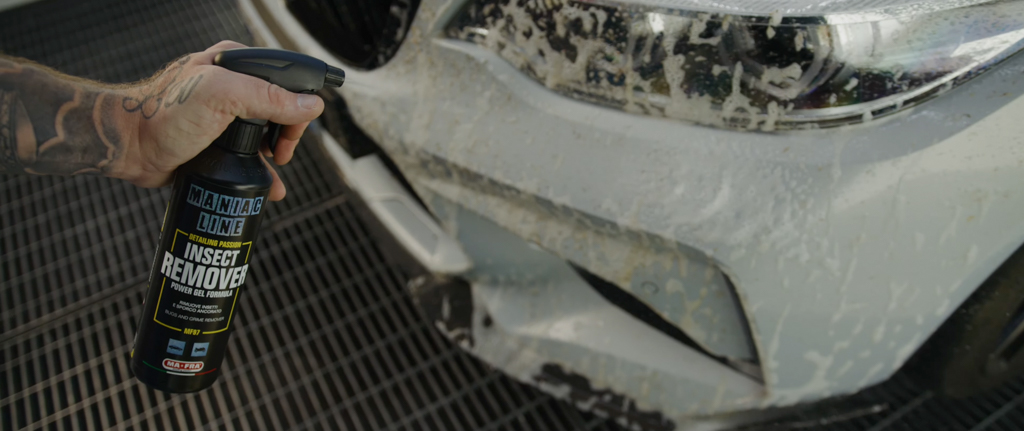
- Nebulize the product: the first step is to evenly spray Insect Remover onto the surface affected by insects. Due to its gel consistency, the product adheres perfectly even to vertical areas, without dripping off immediately. This allows for greater action on the insects.
- Leave on for 30 seconds-this is the ideal time to soften the residue. It is important not to let the product dry in the sun, so choose a shady area or work in the early morning or late afternoon hours. This step allows the gel to penetrate and begin to dissolve the insect proteins and enzymes.
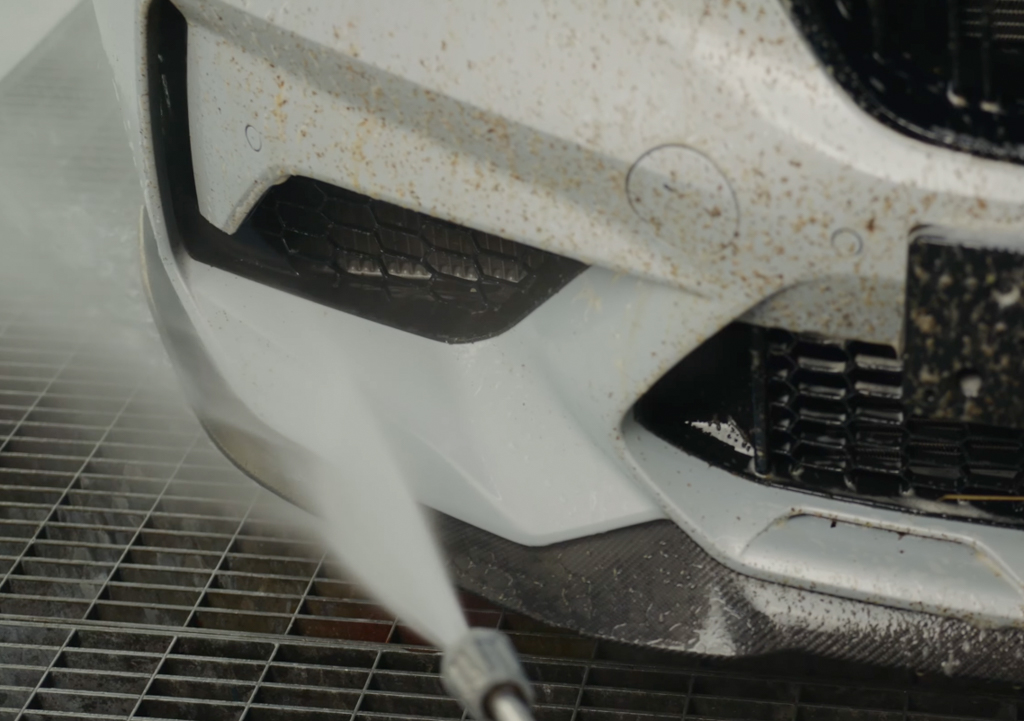
- Remove with high-pressure water: this is where the power of the water jet comes into play. Using the pressure washer, you can remove the remnants effortlessly and, most importantly, without scratching the bodywork. The result is a clean surface, free of haloes and ready for the next stage of cleaning.
Useful tips for perfect cleaning
Want to achieve a truly flawless result? Here are some tips from true enthusiasts:
- Use a Car wash pad, spray Insect Remover and wipe it over the area affected by insects
- If the temperature is high, work in small sections to prevent the product from drying out too quickly
- After removal, always wash the car with a neutral shampoo such as Neutral Foam Shampoo
With these simple steps, your vehicle will shine like new again without any effort or damage to the bodywork.
How to use Insect Remover without a pressure washer
Detailed procedure
Don't have a pressure washer? No problem. The key is to follow the steps with patience and care, respecting the application time.
- Product misting: Mist Insect Remover directly onto the affected areas, completely covering the insect stains...
- Wait for 30 seconds to 2 minutes: application time varies depending on outdoor temperature and surface. Leave for 30 seconds to 2 minutes, if the product is drying spray some product again.
- Microfiber cloth: use a microfiber cloth like Heavy Work soaked in the same product to gently remove insects. No need to scrub hard: let the gel do the work for you.
- Final rinse: rinse with copious amounts of clean water this step removes any residue and leaves the surface ready for a possible full wash.
Differences in results
The only real difference from using a pressure washer is time: manual removal takes a few minutes longer. That said, if done correctly, the cleaning will be equally flawless. Best of all, you don't need professional equipment: just the right product, a little attention, and you're done.
This method is also perfect for those who live in apartments or do not have easy access to a high-pressure water source. With Maniac Line's Insect Remover, the car still shines!
Thorough cleaning after use of insect remover
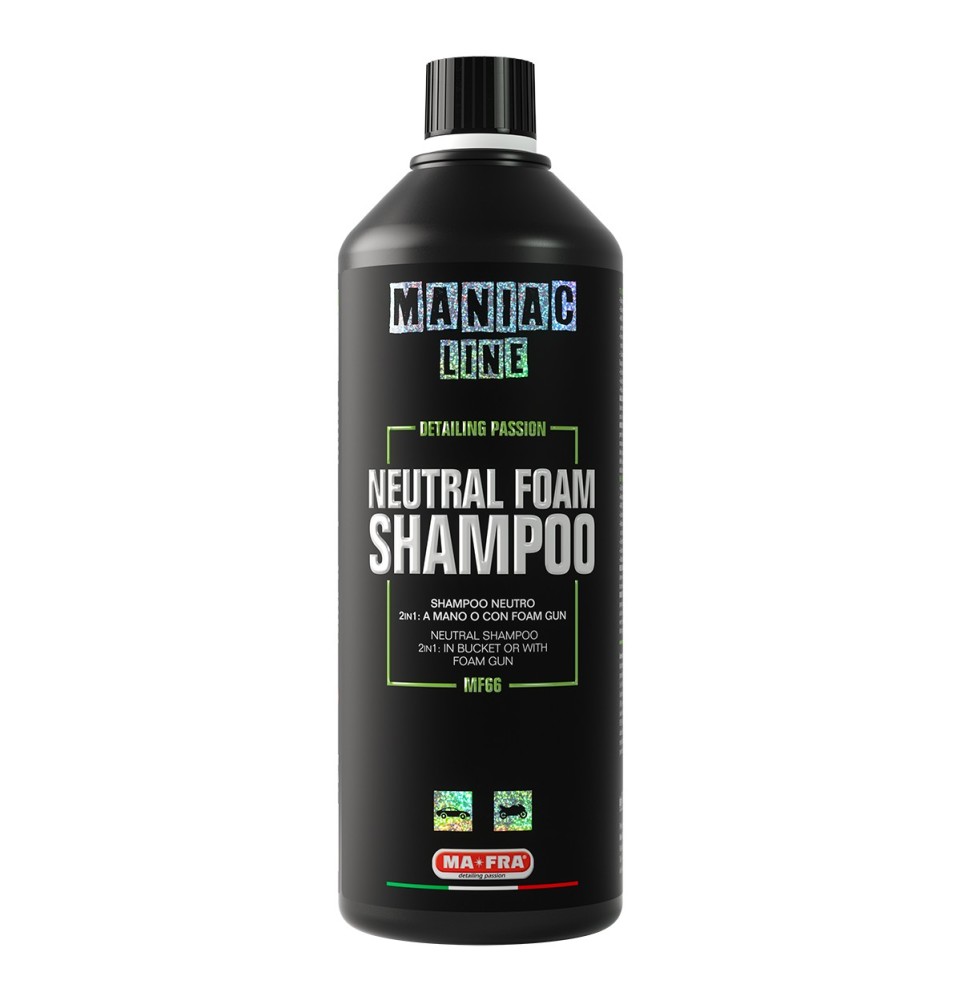
Neutral Foam Shampoo - Maniac Line For Car Detailing
After removing the bugs, it is always advisable to proceed with a thorough car wash. This is where Neutral Foam Shampoo, another product from the Maniac line, comes in..
Neutral Foam shampoo is an ultra-concentrated, shine-enhancing neutral shampoo for cars that does not attack paint and does not interfere with existing protectants (such as waxes or sealants). It produces a thick lather that traps dirt, making it easier to rinse off.

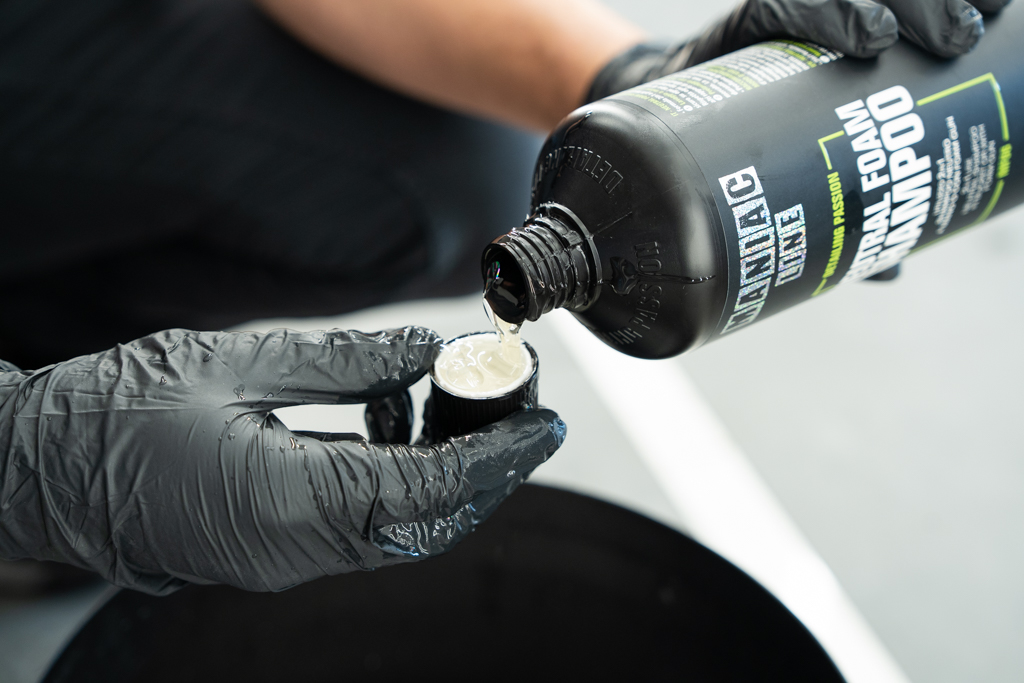
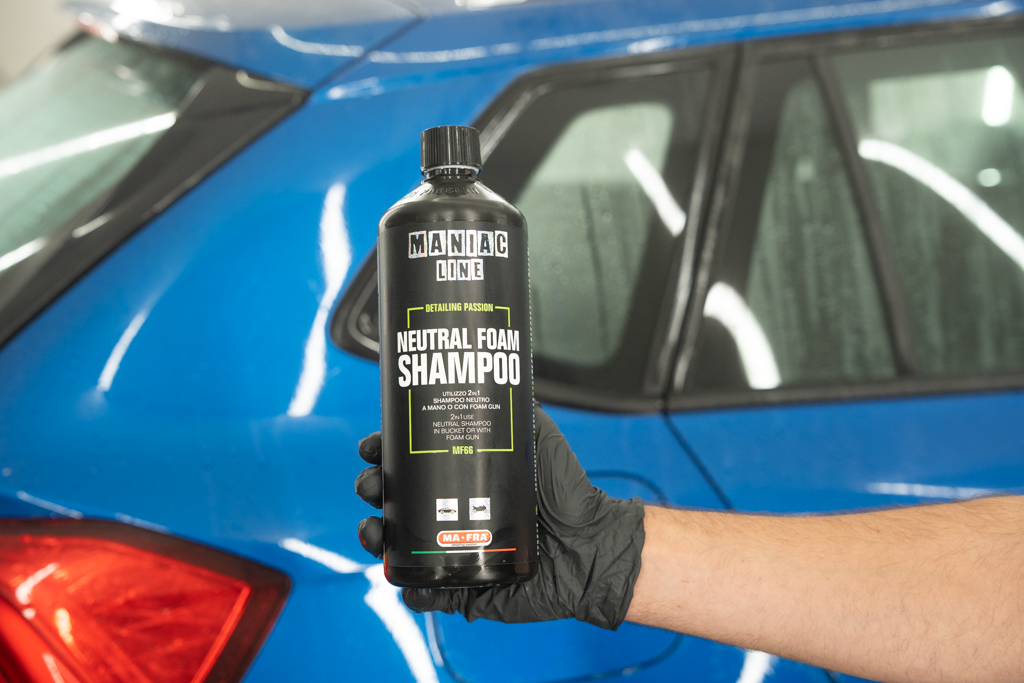
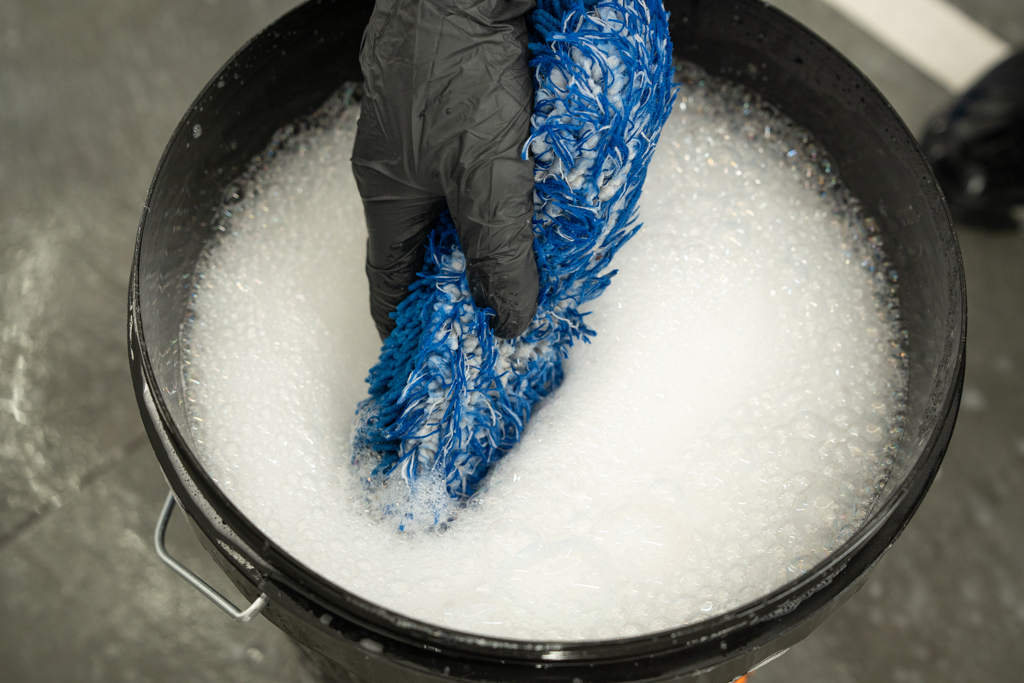
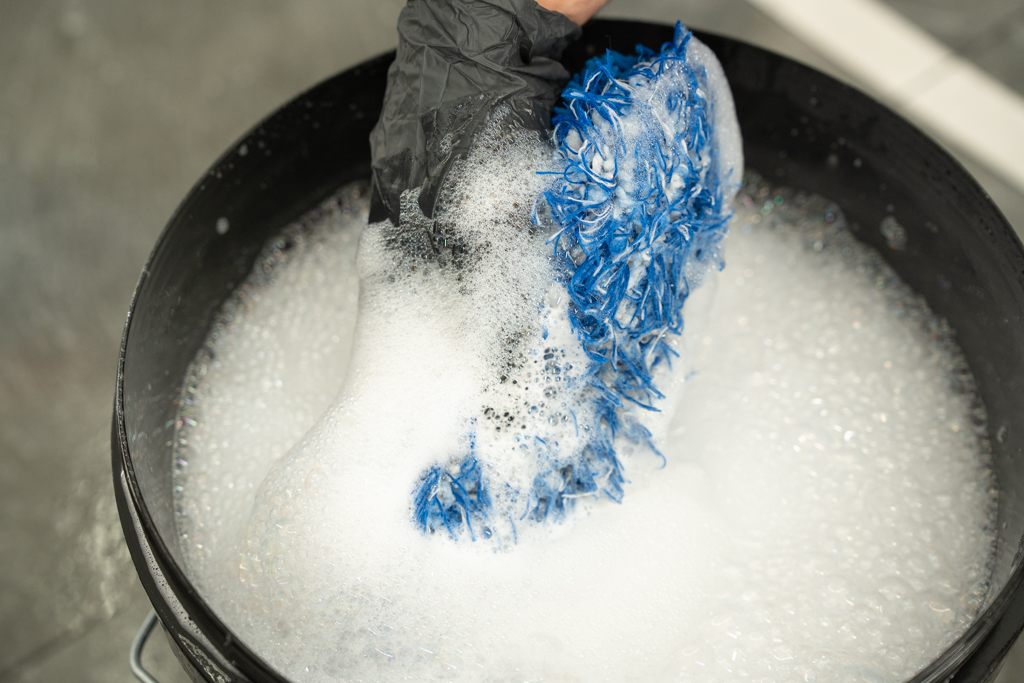
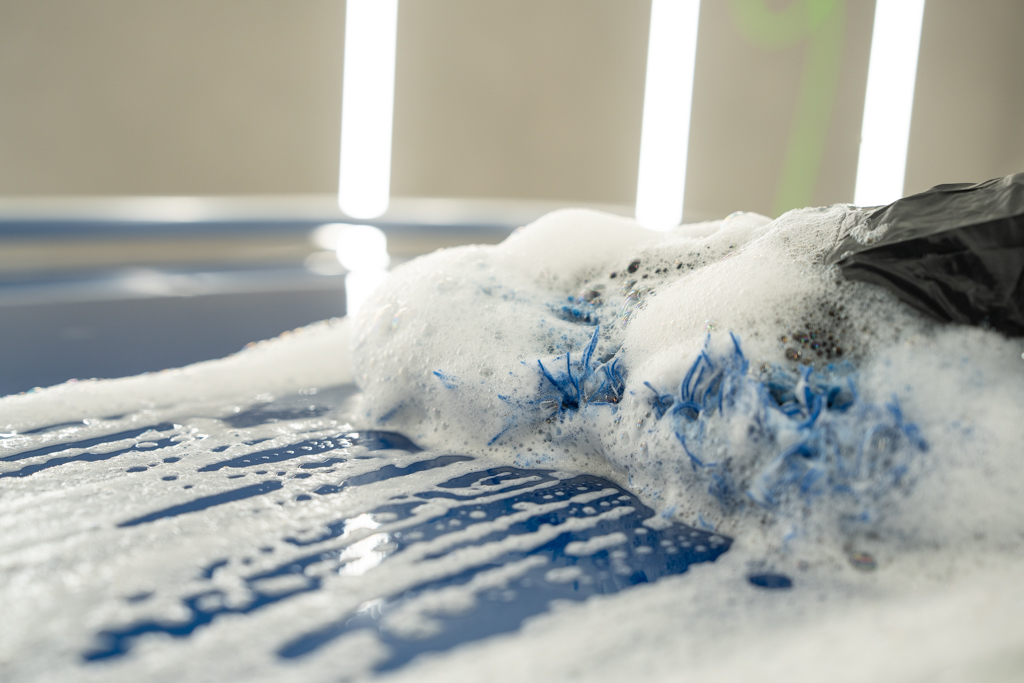
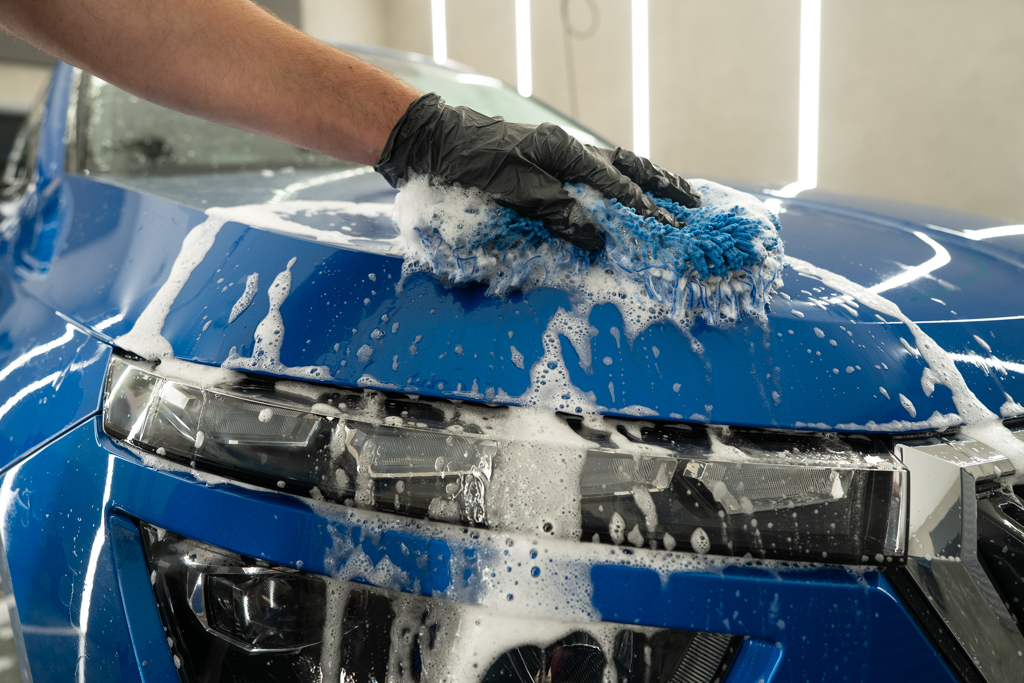
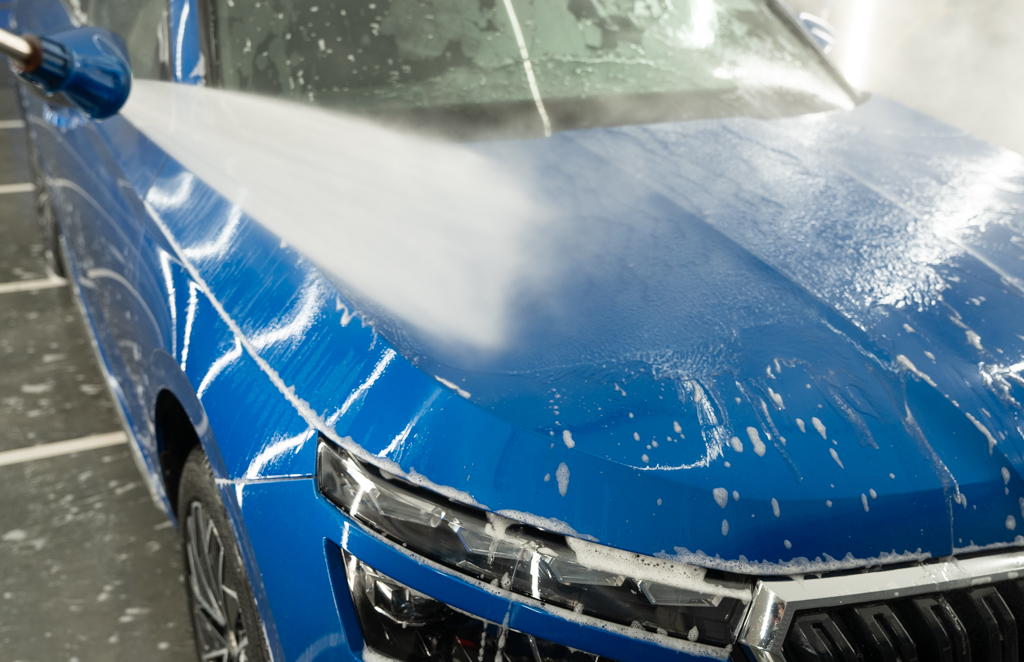
Our advice is to wash the car using the double bucket method and rinsing "from the top down." Use two buckets: one for the water and shampoo solution, one with clean water and wash grid to rinse the wash mitt. Following the double bucket washing method minimizes the possibility of creating micro-scratches during the car washing process.
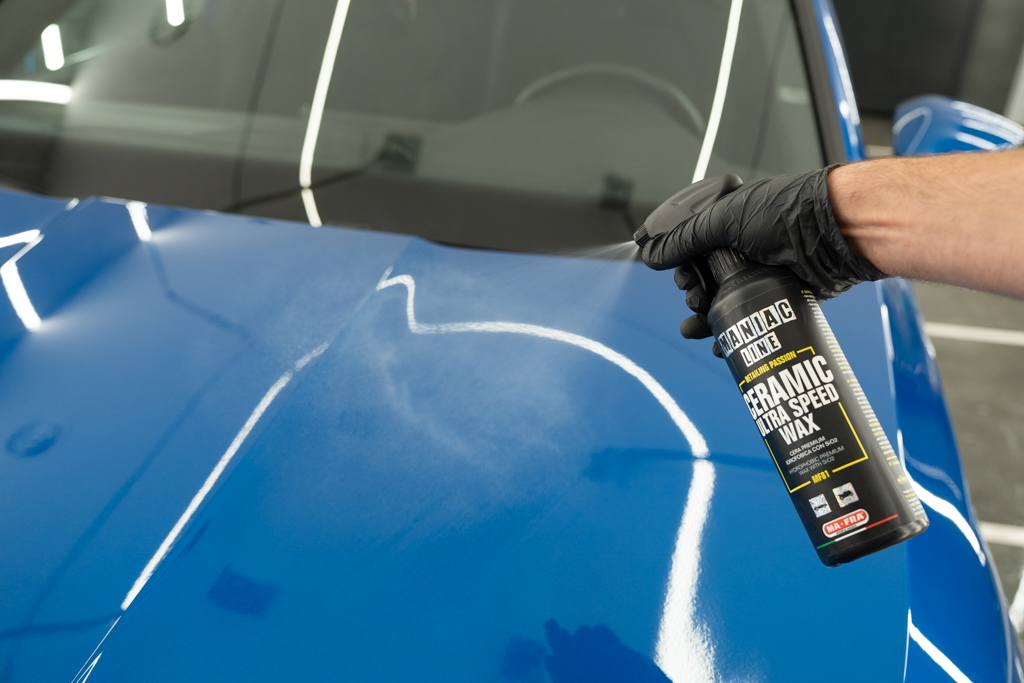
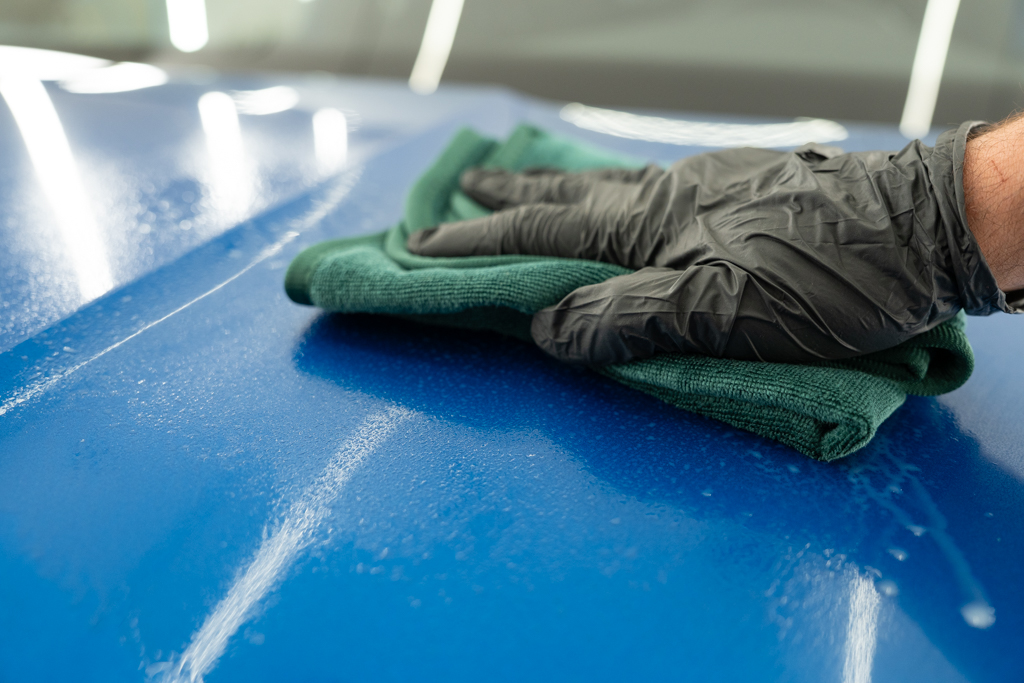
Once you've finished cleaning, why not take the opportunity to add some protection? We recommend using a spray sealant wax such as Ceramic Ultra Speed Wax that instantly bonds to the surface repelling water, dirt and UV rays. This car wax leaves your car clean for a longer span of time due to its water-repellent properties.


What makes Insect Remover different from other insect removal products
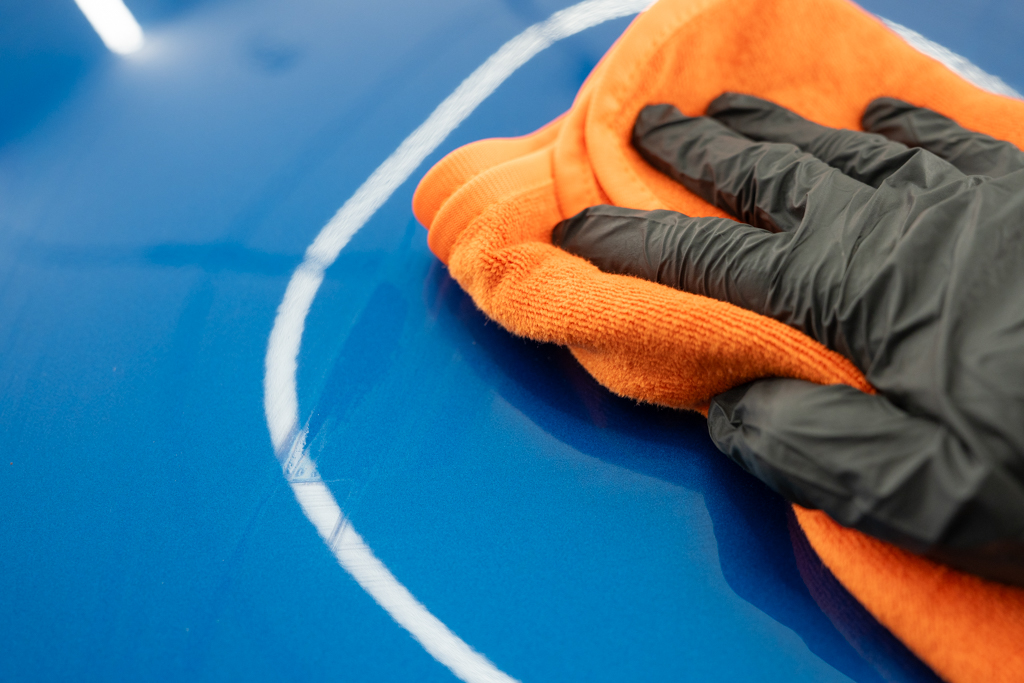
When it comes to removing organic residues left by insects on bodywork, glass, plastics or front grilles, most generic products are limited to surface action. Sprays that are too light evaporate before they really act, while traditional foams tend to run quickly on vertical surfaces, reducing contact time just where they are needed most effectively. In some cases, the use of abrasive accessories to compensate for these shortcomings risks compromising delicate finishes or protective treatments.
Insect Remover, on the other hand, is specially formulated to provide deep, controlled cleaning without compromising surfaces. Its high-adhesion gel structure allows for precise application even on sloping or vertical areas, preventing dripping and significantly increasing contact time. This allows the product to effectively dissolve protein and organic residues, reducing the risk of halos, stains or microdamage.
It is also safe on protective treatments, such as waxes, sealants and nanotechnology coatings, and can be used without concern even on already protected surfaces. The formula is balanced to ensure maximum cleaning effectiveness and total gentleness, leaving no residue or halos.
If you devote maniacal attention to cleaning your car and want a product that works at the same level of precision as you do, Insect Remover is the professional solution that really makes a difference.
Where insects most often accumulate on the car
1 - Bumpers, mirrors and front grille.
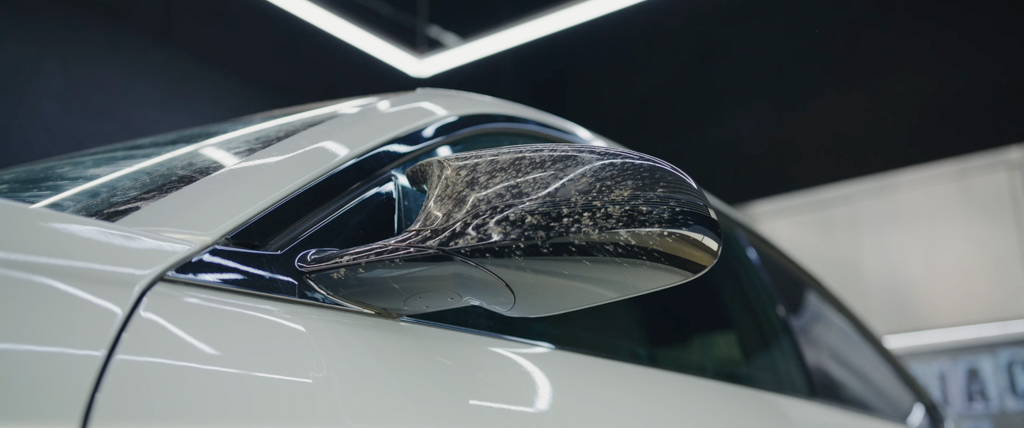
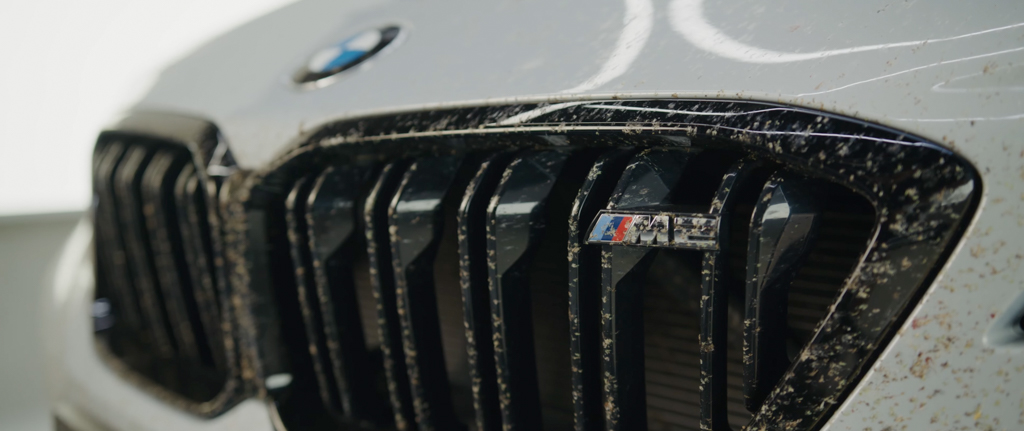
The areas most affected by insects? The front bumper, without a doubt. As the part of the car that cuts through the air while driving, it is also the part that suffers the most insect impacts. Right after come the side mirrors, which collect insects on the side facing the road while driving, and the front grille, which often holds insects in the cracks.
The problem here is not only aesthetic, but also practical: if the bugs dry out too much, it becomes impossible to remove the stains, leaving polishing as the only option. In addition, if the grille is clogged, engine ventilation may also suffer, particularly during the warmer months.
For those who drive many miles on the highway, it is virtually impossible to avoid accumulation. In any case, knowing the critical areas helps to intervene in time with the right product, avoiding long-term damage.
2 - Windshield and headlights
The windshield is the second most affected area, as we have already mentioned. But headlights, especially the front ones, also tend to collect quite a lot of insect remains. This not only makes them dirty but also compromises the quality of night lighting. Dry insects on headlights can alter light scattering, making lighting less efficient and increasing the risks of driving in poor visibility conditions.
Cleaning these areas requires care. Using the right products avoids scratching glass or damaging protective headlight treatments (such as UV film or scratch-resistant coatings). A good bug remover, safe even on delicate surfaces, is the way to go.
How to clean the windshield from insects
Cleaning your windshield of insects may seem simple, but if you don't do it the right way you risk leaving halos, scratches, or worse, damaging the glass itself. Gnats and other insects dry out quickly on contact with hot glass, forming an annoying film that is difficult to remove with simple windshield wipers.
Spray Insect Remover on the windshield, making sure to cover all affected areas. Leave it on for about 1 to 2 minutes (not in direct sunlight or on a cold surface). In the meantime, you can prepare a clean microfiber cloth such as Heavy Work, soaked in Insect Remover.
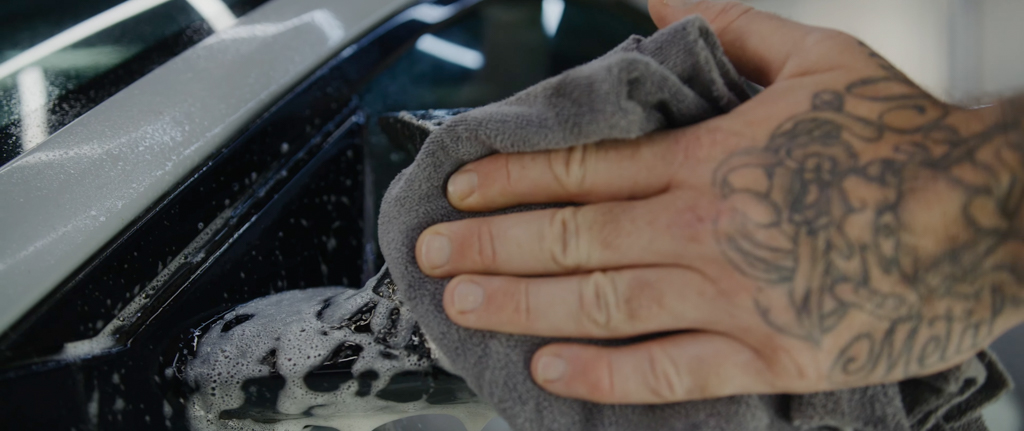
After letting Insect Remover work, wipe with the soaked cloth in horizontal motions, avoiding too much pressure. Remove any major residue first, then finish with another light pass. At this point, rinse with clean water and then use an auto glass cleaner such as Glass Cleaner & Degreaser with Maniac Line's Glass cloth to achieve perfectly clean glass.


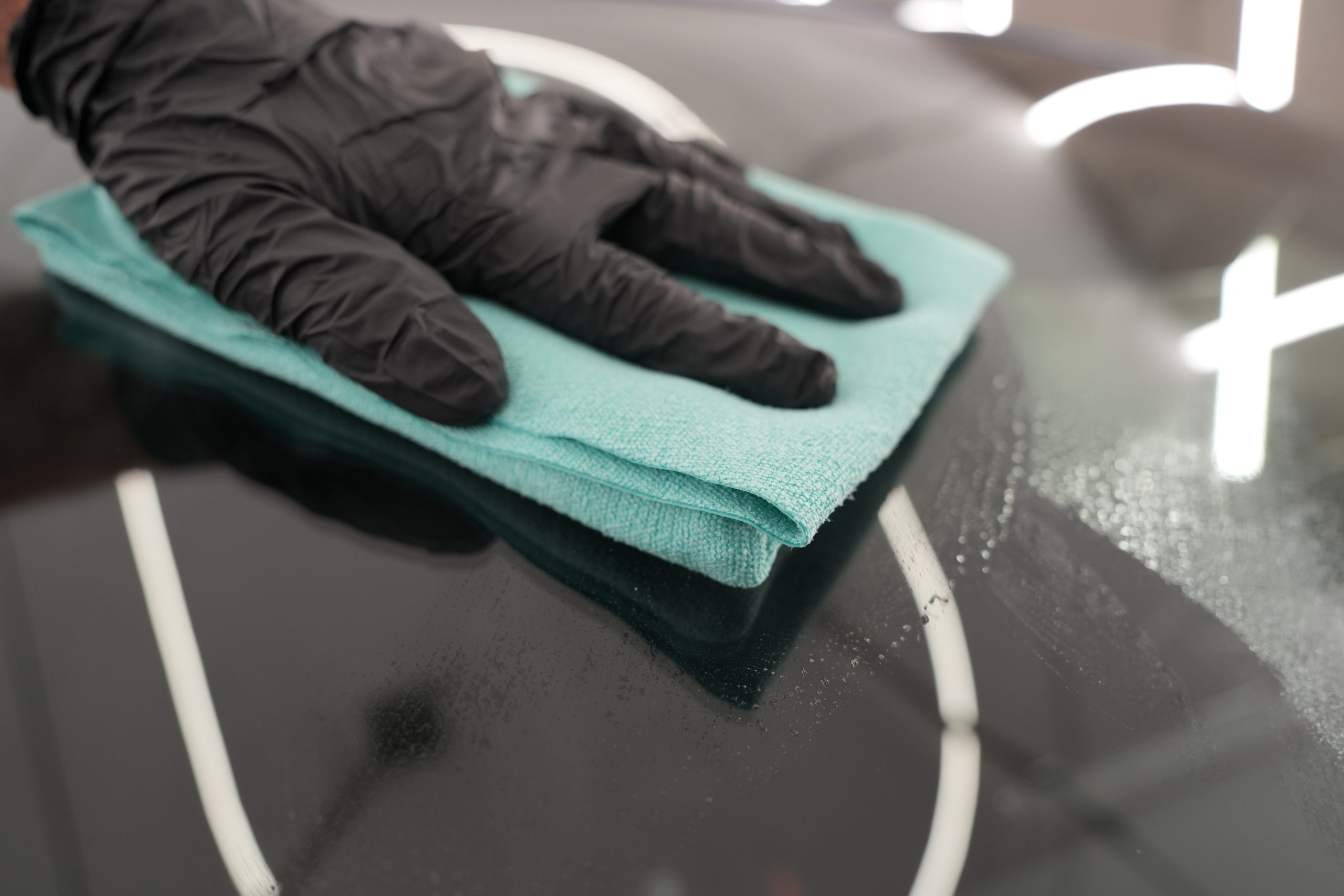
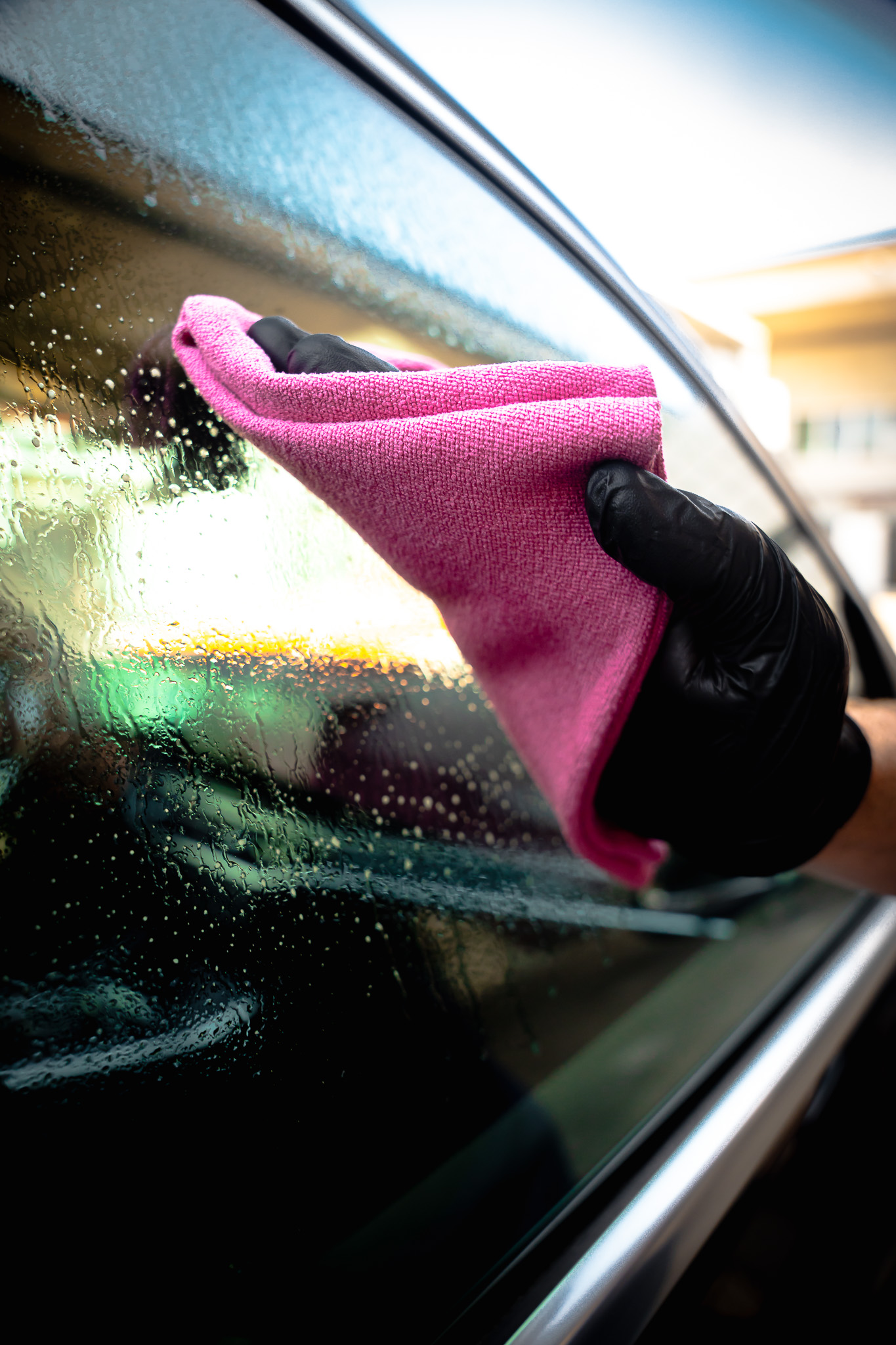
The most effective method of cleaning the windshield involves the combined use of:
- Specific insect removal product, such as Insect Remover from Maniac Line.
- Dedicated microfiber cloth as Heavy Work.
- Gentle linear movements, starting from the edges toward the center.
- Rinse thoroughly with clean water
- Cleaning with a dedicated glass cleaner such as Glass Clenaer & Degreaser and Maniac Line's Glass cloth
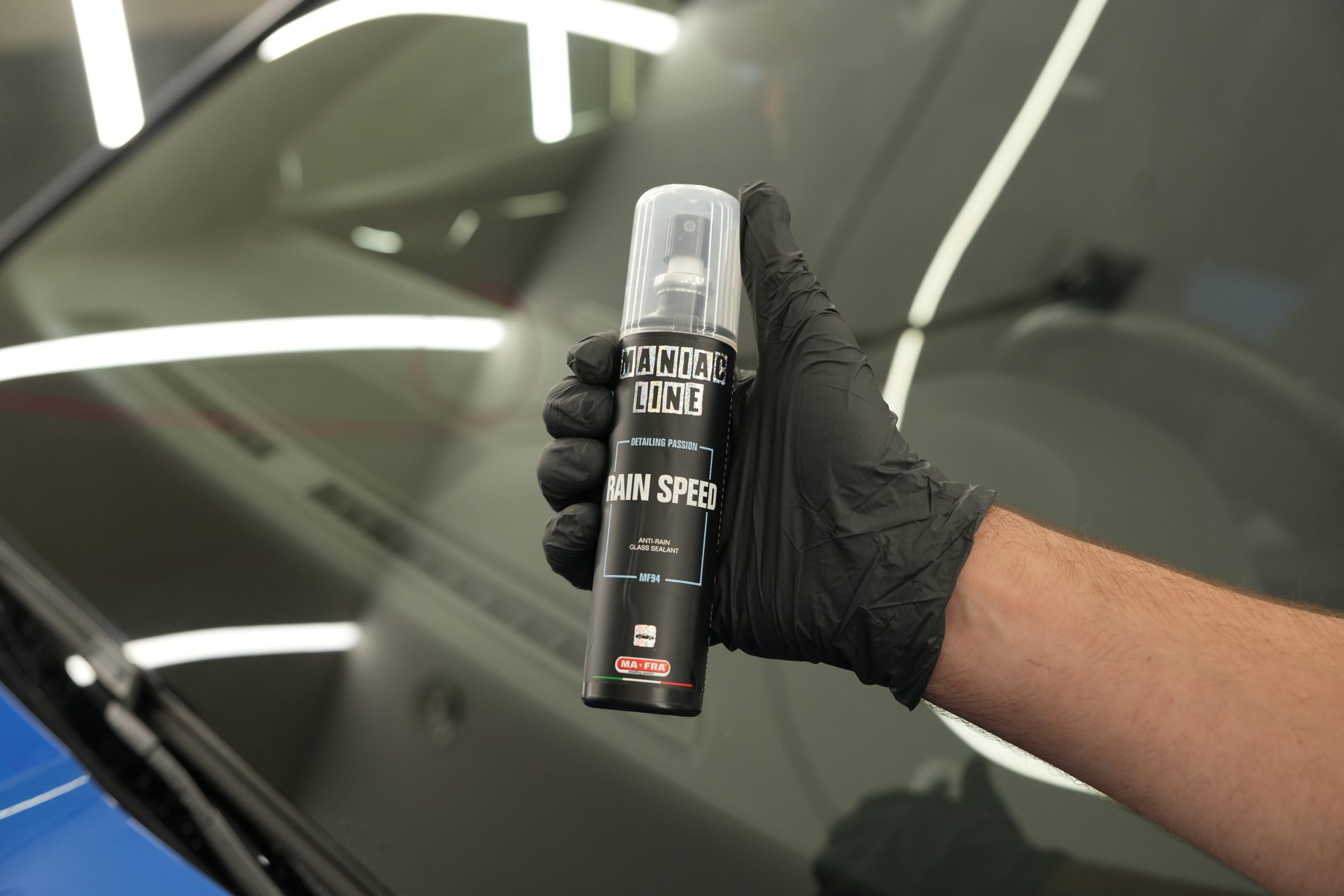
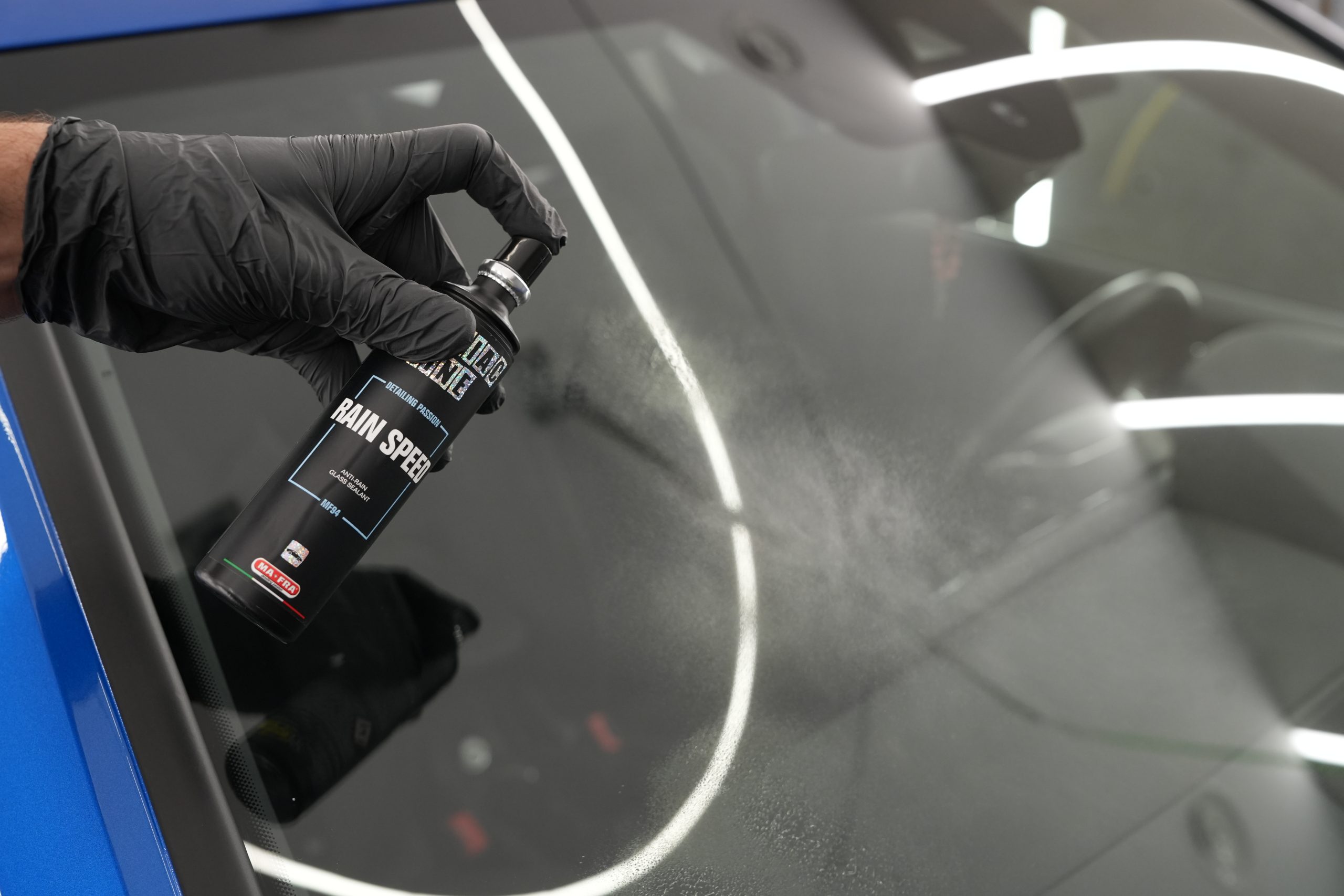
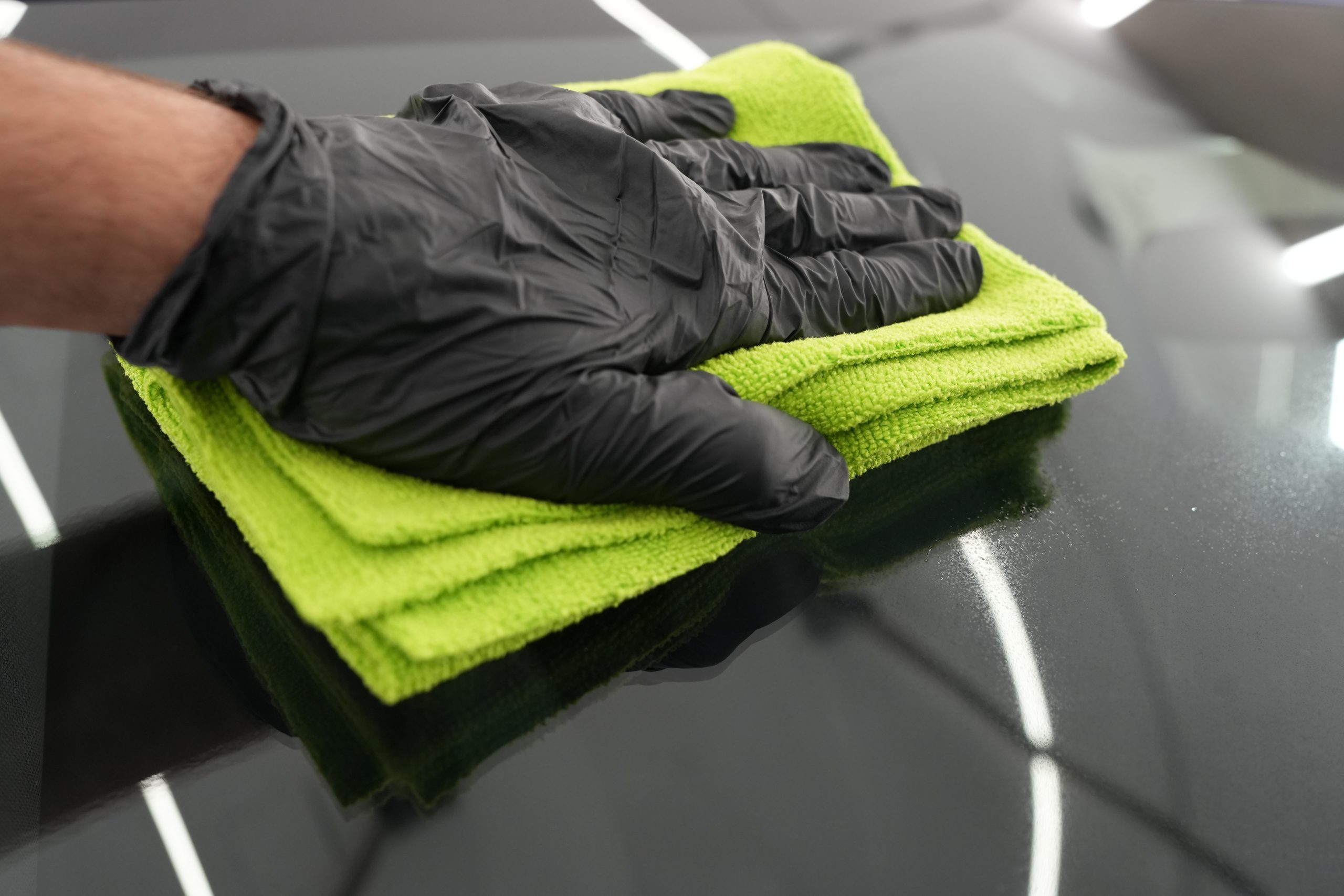
Special attention should be given to the edges of the windshield, where more stubborn dirt often accumulates. There you can use a soft brush to help the product penetrate better. Finally, a water-repellent treatment such as Rain Speed's will improve visibility during rain and keep the surface smooth for longer.

Remove insect stains from the bodywork
Not everyone knows that insects not only attack, but also leave permanent stains on the bodywork. These are not immediately visible, but over time they become noticeable: whitish halos, dull dots or discolored areas. This is why it is important to take action immediately, preferably within 48 hours of travel.
The ideal time is immediately after a trip, when the car is cold and the dirt is still fresh. Even if you don't have time for a full wash, a quick application of Insect Remover to the affected areas can prevent future damage that can only be solved by polishing.
How to avoid polishing
Many drivers discover too late the consequences of neglecting these residues. At that point, the only remedy is polishing. That's why prevention is the best weapon.
A product like Maniac Line Insect Remover, thanks to its specific formulation, dissolves proteins before they can affect the paint. Applying it regularly, especially after a highway trip, keeps the bodywork clean and protected.
Removing bugs from your car: mistakes to avoid
1 - Do not use abrasive tools
The first mistake that so many people make? Using the wrong cloth. Car surfaces are delicate, and using abrasive tools such as rough sponges or overly dry cloths can leave micro-scratches visible even to the naked eye. Especially if the insect residue is dry and tough, forcing removal only makes it worse.
If you really have to use a cloth, choose one made of microfiber specifically for cars-it's soft, gentle and doesn't leave halos. And, of course, always pair it with a professional product, don't rely solely on water and don't rely on household soaps that are not indicated for use on cars.
2 - Avoid aggressive household products
Another common mistake? Using kitchen cleaners, bleach, vinegar or universal degreasers. Although they may seem effective, many of these products are too harsh and risk ruining surfaces, especially when used on paint, plastic, or headlights.
The solution? Rely on car-specific products, such as Maniac Line Insect Remover, which guarantees effectiveness and safety, both on the bodywork and on more delicate parts. This way, you not only remove insects easily, but also protect your car from unnecessary damage.
Remove encrusted insects
If you have neglected the problem for too long, you may need to resort to more aggressive methods:
- Clay bar: a special clay paste suitable for mechanical bodywork decontamination. Light polish: in extreme cases, a mild polish can remove stubborn marks; choose this only if you are already familiar with these products
Professional treatment: if the damage is obvious, contact an experienced detailer.
Best times to clean the car of insects
Timing is everything. The best window for eliminating bugs is immediately after the cold-car trip and before the residue dries completely.
Cleaning right away not only makes the job easier, but also prevents chemical damage caused by acids contained in organic remains. A simple wipe with a damp cloth will not prevent permanent damage, water alone will not thoroughly remove the acids released by insects, you should always apply a product indicated as Insect RemoverAnother important tip: Never wash your car in direct sunlight, especially if you use chemicals. Heat accelerates evaporation on the surface being treated and can dry out the product before it has time to act. This not only reduces the effectiveness of the bug remover, but can cause halos and secondary stains.
Ideally, you should wash your car in the shade or during the cooler hours of the day. That way the product stays active longer, and you can work calmly and accurately.
Car care: why does it go beyond aesthetics?
Car cleaning is a passion. Who doesn't love to see their car shine under the sun? Yet, you don't need to be a detailing fanatic to get great results-just know the right products and use them in the right way.
Maniac Line Insect Remover, combined with a weekly wash routine keeps your car looking fresh and well cared for. And if you combine this with a protective treatment, you'll make maintenance much easier.
Taking care of your car, in short, is like taking care of your home: it pays you back every day.
What's more, insects on the car are not only annoying to look at, but potentially damaging to bodywork, windows and plastics. Removing them promptly is critical to keeping your car in top condition over time. With the right products and techniques, even the most difficult cleaning can become quick and easy.
The best ally in this battle? Without a doubt Insect Remover from Maniac Line, thanks to its powerful and safe gel formula. It is easy to use, effective on all types of surfaces and perfect for both quick and thorough cleanings.
Don't wait until the damage is done: every time you come back from a trip or highway ride, take a few minutes to care for your vehicle. It will thank you, not only with a flawless appearance, but also with a longer life span.
-
What is the best method to remove gnats from the windshield?
The best method is to use Insect Remover, leave it on 1-2 minutes and remove with a microfiber cloth soaked in the product, then rinse. Avoid using just water or the wipers: you risk halos and compromised visibility.
-
Can I also use Insect Remover on motorcycles or bicycles?
Yes, the product is safe on any surface, including motorcycles and bikes. Just make sure not to apply it on hot parts or in direct sunlight.
-
How often should I remove bugs from the car?
Immediately after each trip, especially in summer or on highways. If not possible, at least every 2-3 days to avoid permanent stains.
-
Does Insect Remover damage the paint?
No, indeed. It is designed to be gentle and safe on surfaces, even those treated with waxes, sealants, or protective coatings.
-
What is the best time to wash the car after a trip?
As soon as possible when the surface is cold, but always in the shade or cool hours of the day to avoid premature evaporation of the product.